Thank you for sending your enquiry! One of our team members will contact you shortly.
Thank you for sending your booking! One of our team members will contact you shortly.
Course Outline
Introduction to Design Thinking
- Defining Design Thinking: core concepts.
- The strategic value of human-centred design.
- The historical development and evolution of Design Thinking.
- Practical applications and detailed case studies.
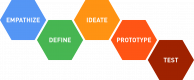
The Phases of Design Thinking
- Empathize: Deeply understanding user needs and experiences.
- Define: Accurately framing the core problem.
- Ideate: Generating diverse and creative solutions.
- Prototype: Creating tangible models of ideas.
- Test: Validating solutions and refining through iteration.
Techniques and Tools for Design Thinking
- User research methodologies (interviews, surveys, and observational studies).
- Creating empathy maps and customer journey maps.
- Brainstorming strategies and mind-mapping techniques.
- Essential prototyping tools and methodologies.
- Establishing feedback loops and continuous iteration cycles.
Applying Design Thinking in the Workplace
- Tackling internal corporate challenges using Design Thinking.
- Fostering team collaboration and enhancing creative problem-solving capabilities.
- Streamlining workflows to increase efficiency.
- Embedding Design Thinking into product and service innovation cycles.
Final Workshop and Assessment
- Collaborative group project: Applying Design Thinking to a real-world challenge.
- Presenting solutions and receiving constructive feedback.
- Comprehensive final exam to evaluate knowledge retention.
Summary and Recommended Next Steps
Requirements
- A foundational grasp of business processes and problem-solving methodologies.
- Experience collaborating within teams and managing cross-functional projects.
Target Audience
- Business professionals.
- Project managers.
- Teams focused on innovation and strategy.
- Product developers.
24 Hours