Delivered either online or onsite, our instructor-led live Enterprise Architecture (EA) training courses offer a comprehensive overview of the tools utilized to define and deploy enterprise architectures. Through interactive discussions and practical exercises, participants gain a deep understanding of best practices in this field.
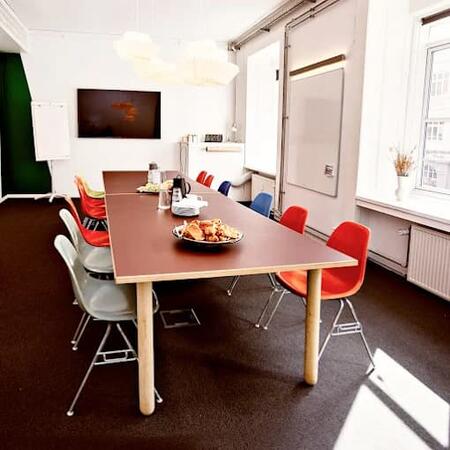
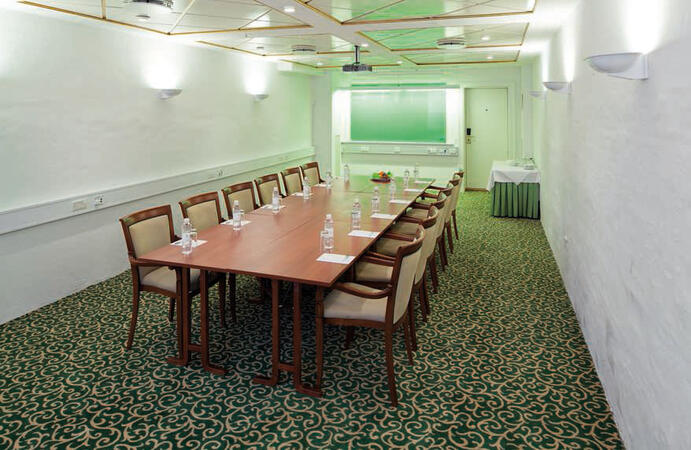
Enterprise Architecture training is offered as "online live training" or "onsite live training". Online live training (also known as "remote live training") utilizes an interactive remote desktop environment. Onsite live training is available either locally at your customer premises in Copenhagen or at NobleProg’s corporate training facilities in Copenhagen.
You can also take bus 26 or 7A and get off around Vesterbros Torv; from there it is a short walk.
By bus
Useful nearby stops include:
Vesterbros Torv (Vesterbrogade) — about 1 minute from the area.
Frederiksberg Allé (Vesterbrogade) — nearby.
Trommesalen (Vesterbrogade) — nearby.
Bus 26 and 7A serve the Vesterbrogade corridor.
København, Copenhagen
NobleProg København, Bredgade 37, København K, denmark, 1260
Near Amalienborg Palace & Royal Theatre.
If you arrive by train
If you arrive at Copenhagen Central Station (København H):
Walk to København H Metro.
Take the M3 or M4 metro toward Kongens Nytorv.
Get off at Kongens Nytorv.
Walk north toward Nyhavn, then continue along Bredgade.
Bredgade 37 is about 500 m / 6 minutes' walk from Kongens Nytorv.
Another easy option
Marmorkirken (Marble Church) Metro Station is also very close to Bredgade 37. The nearby Bredgade area is about 2 minutes' walk from Marmorkirken station.
By bus
There are bus stops around Dronningens Tværgade / Bredgade, so you can also travel by bus and walk the final few minutes.
This live, instructor-led training in Copenhagen (online or on-site) is designed for intermediate to advanced software professionals seeking to understand the creation of distributed systems that scale efficiently and respond gracefully to failures.
By the conclusion of this program, participants will be able to:
Design distributed systems that effectively manage load, latency, and failure states.
Comprehend core architectural patterns such as microservices, event-driven architecture, and CQRS.
Assess the balance between consistency, availability, and partition tolerance (CAP theorem).
Determine the most suitable communication, storage, and coordination methods.
This live, instructor-led training, offered Copenhagen (online or onsite), is designed for intermediate IT professionals and ICT service managers aiming to master and apply ITSM fundamentals based on ITIL 4.
By the conclusion of this program, participants will be able to:
Grasp the fundamental concepts and organizational structure of ITIL 4.
Implement service design and architecture practices in accordance with ITIL 4 principles.
Drive the effective delivery and sustainability of ICT services.
Assess practical scenarios and model ITSM practices.
This live, instructor-led training, offered in Copenhagen (online or on-site), is tailored for architects and enterprise architecture professionals from beginner to advanced levels. It aims to provide a comprehensive understanding and practical skills in utilizing the NAF for enterprise architecture. The course covers a wide range of aspects without limiting the focus to specific views or functions, and employs Sparx Enterprise Architect or any other preferred tools.
By the end of this training, participants will be able to:
Efficiently navigate NAF documentation.
Leverage Sparx Enterprise Architect for architecture-related workflows.
Describe and comprehend various categories of NATO architectures.
Create and interpret NATO Architecture Views.
Identify and analyze stakeholders and Communities of Interest (CoIs).
Align stakeholder interests with the architectural framework.
Analyze and document the architectural interests and impacts of CoIs.
This live, instructor-led training in Copenhagen (delivered online or on-site) is tailored for IT professionals aiming to develop the expertise to correctly install structured cabling systems in any architectural environment.
By the conclusion of this training, participants will be able to:
Comprehend the concepts and infrastructure elements that define structured cabling.
Perform correct installation and testing procedures for cabling systems.
Understand the applicable industry standards, techniques, and equipment utilized in structured cabling.
This three-day instructor-led session in Copenhagen provides a comprehensive overview of SysML and MagicDraw/Cameo through the lens of a practical case study. The programme emphasizes core modelling concepts and hands-on exercises, empowering systems engineers to construct, trace, and analyse complex models within real-world systems engineering contexts.
This live Copenhagen course covers the fundamentals of SysML and Cameo Systems Modeler, including structural, dynamic, and specific diagrams. You will learn to define a tailored modelling approach and complete practical case studies.
Master Domain Driven Design to synchronize software with business concepts. Develop proficiency in strategic and tactical patterns, including Ubiquitous Language and Bounded Contexts. This training in Copenhagen empowers teams to handle complexity and construct flexible, maintainable software architectures.
Through a blend of lectures, demonstrations, and interactive labs, this course establishes the foundational skills required to build and maintain an Enterprise Architecture (EA) based on the Unified Architecture Framework (UAF) version 1.2.
This practical, instructor-led course in Copenhagen guides intermediate Go developers through the design and deployment of event-driven applications using Kafka, RabbitMQ, or NATS. Learners will develop decoupled services, manage messaging infrastructure, and deploy scalable, resilient cloud-native systems.
This course is tailored for professionals who possess an existing ITIL® 4 Foundation certification and seek to elevate their expertise to align with the latest ITIL® 5 framework. It offers a streamlined and effective pathway for transitioning, focusing on the distinct differences, novel concepts, and broadened practices featured in ITIL® 5.
Designed for IT staff and management in Copenhagen, this course offers a holistic perspective on IT Service Management and prepares candidates for the ITIL 4 Foundation exam by covering key concepts, guiding principles, and essential practices to optimize value delivery.
Obtain a comprehensive overview of ITIL® 5, the modern framework for overseeing digital products and services in fast-paced environments. This course builds a strong foundation for understanding how organizations create value through effective service management and collaboration.
This live, instructor-led session is tailored for junior engineers and professionals seeking to apply MBPLE within CATIA Magic to comprehend and execute product line engineering strategies.
By the conclusion of the training, participants will be capable of:
Understanding the core concepts and terminology of PLE and MBPLE
Describing best practices for product line modeling
Implementing product line definition processes in CATIA Magic
Applying MBPLE features such as feature models, variation points, and configurations
This course aims to teach the fundamentals of the Systems Modeling Language (SysML), its application via the MagicDraw/Cameo software, basic Model-Based Systems Engineering (MBSE) simulation techniques, and best practices in MBSE. The training covers the essentials of creating templates and generating reports within the MagicDraw/Cameo tool suite, while also explaining how macros and scripts function in MagicDraw and their potential applications.
This course is structured to impart the fundamentals of the Systems Modeling Language (SysML), its implementation via the MagicDraw/Cameo software, essential Model-Based Systems Engineering (MBSE) simulation techniques, and industry best practices. The training is also tailored to equip professionals with the underlying knowledge of architectural simulation, an introduction to the Simulation Toolkit plugin, the simulation of various diagram types, and methods for integrating diagram simulations to automate the architecture.
This course is designed to cover the fundamentals of the Systems Modeling Language (SysML), its implementation using MagicDraw/Cameo, basic MBSE simulation techniques, and industry best practices in MBSE. It instructs learners on the core concepts and features of validation rules, validation suites, and model metrics, while introducing the development and utilization of model queries within MagicDraw/Cameo.\u200b
This programme aims to impart the fundamentals of the Systems Modelling Language (SysML), its implementation via MagicDraw/Cameo software, basic Model-Based Systems Engineering (MBSE) simulation techniques, and established MBSE best practices. The training offers a foundational introduction to the key concepts and features of CATIA No Magic’s Teamwork Cloud, while also introducing the core principles and features of Domain Specific Languages (DSL) within MagicDraw.
This live, instructor-led training, available Copenhagen (online or on-site), is designed for intermediate professionals aiming to apply NAF to enhance enterprise architecture design and decision-making in defense contexts.
By the end of the session, participants will be able to:
Comprehend the structure and intent of the NATO Architecture Framework.
Identify and explain the different architecture views within NAF.
Map stakeholder needs to architectural elements.
Create NAF-compliant models using tools like Sparx Enterprise Architect.
This course combines module-based lectures, instructor demonstrations, and hands-on labs. Our trainers are seasoned practitioners who balance theoretical understanding with practical application.
Key Outcomes:
Understanding the purpose of ontologies
Comprehension of the benefits associated with knowledge graphs
Practical proficiency in Protégé and Concept Modeling
This instructor-led live training (available online or on-site) targets beginner to intermediate PCB designers and electronics engineers seeking to develop a comprehensive, controlled PCB design workflow using Altium Designer.
Participants engage with a single connected project, progressing from project setup and component libraries through schematic capture, PCB layout, and verification, to manufacturing outputs and controlled production release.
By the end of this training, participants will be able to:
Develop and manage structured Altium Designer PCB projects.
Construct and validate schematic designs and component libraries.
Configure PCB rules, routing, DRC, and manufacturing constraints.
Generate and verify fabrication, assembly, and mechanical outputs.
Apply practical high-speed design constraints.
Manage engineering changes and controlled re-releases.
This live, instructor-led training is offered in both online and onsite formats, targeting beginner to intermediate-level professionals. The aim is to help participants understand configuration management risks and apply product line engineering concepts, with or without the support of dedicated tools.
By the end of this program, participants will be able to: analyze risks related to product changes throughout the lifecycle; apply configuration management best practices; comprehend key product line engineering concepts; model variability and product lines independently of tools; implement an end-to-end process from defining variability to deriving products; and evaluate the benefits of using tools such as pure::variants and FeatureIDE
This live, instructor-led training, delivered online or on-site, targets beginner-level professionals seeking to utilize pure::variants to understand and implement product line engineering concepts.
By the end of this session, participants will be able to:
Understand product line engineering concepts applied with pure::variants
Analyze best practices for product line modeling
Implement an end-to-end variability process (from definition to variant instantiation)
Use pure::variants with connectors such as Microsoft Office
This live, instructor-led session (conducted online or on-site) is designed for system administrators and infrastructure engineers aspiring to structure, implement, and manage private OpenStack cloud infrastructure for enterprise contexts.
By the conclusion of this program, participants will possess the ability to interpret OpenStack architecture, deploy private cloud foundations, manage compute and storage assets, enforce security via Keystone, and execute enterprise best practices.
This live, instructor-led training (delivered online or onsite) targets introductory-level professionals aiming to understand the value, challenges, and implementation principles of MBSE through the ARCADIA method and Capella tool.
By the end of the session, participants will be able to understand the principles and benefits of MBSE; describe the ARCADIA methodology and its positioning within systems engineering; explain the added value of Capella compared to traditional document-based tools; identify the impacts of MBSE adoption on engineering processes and practices; and understand MBSE's contribution to digital continuity and multidisciplinary collaboration.
This professionally guided live session, available either online or in-person, is designed for professionals at beginner to intermediate levels seeking to master the application of MBSE through the ARCADIA methodology and the Capella software.
Upon completing this training, participants will be equipped to: comprehend MBSE principles and their alignment with ISO 15288:2023; explain the ARCADIA methodology and its various architectural layers; apply ARCADIA from operational needs through to physical architecture; utilize Capella to construct, analyze, and manage system models; and implement best practices in system modeling via a real-world case study
This live, instructor-led training, available online or on-site, is tailored for professionals and domain experts aiming to understand MBSE concepts and proficiently review system models created using the ARCADIA method and the Capella tool.
By the end of this training, participants will be able to:
Comprehend the ARCADIA methodology and its architectural layers
Navigate and interpret Capella models
Evaluate the consistency of models with system requirements and architecture
Conduct structured model reviews
Add clear and relevant review comments within Capella
This three-day course in Copenhagen provides system engineers with the UML 2 and SysML skills needed for effective requirements gathering and embedded software design. You will learn to trace business rules through to implementation, modeling blocks and interactions with Enterprise Architect to create agile and coherent system architectures.
This hands-on course in Copenhagen provides a comprehensive understanding of systems modelling via the latest OMG SysML specification. By covering both notation and semantics, it equips students to apply their skills effectively across various system modelling methods and tools for practical applications.
In this instructor-led live session, delivered Copenhagen (online or onsite), participants will explore how to leverage SysML as implemented in Enterprise Architect (EA) to perform system requirements analysis and modelling.
By the conclusion of the training, participants will be able to:
Utilise SysML in Systems Engineering projects through a Model Based Systems Engineering (MBSE) methodology.
Determine system requirements based on use case models.
This course centers on the practical construction of connected system models, encompassing the full spectrum from requirements and use cases to structure, behavior, interfaces, and analysis. It emphasizes not only the mastery of the SysML v2 language but also a deep understanding of how its various elements interact to define a coherent system.
In this live training session held in Copenhagen, participants will investigate the nuanced interaction between software, technical, and enterprise architecture. You will learn to navigate the complexities of distributed systems and associated trade-offs while gaining proficiency in standard patterns for SOA, microservices, and efficient inter-system communication.
A practical workshop in Copenhagen for analysts and developers, concentrating on UML modeling with Enterprise Architect. Discover advanced features such as MDA and XMI to optimize problem analysis and design documentation, while mastering best practices for efficient system modeling.
Read more...
Last Updated:
Testimonials (5)
Detailed use of EA SW and understanding of main SySUML concepts
Marco Barducci - IDS Ingegneria Dei Sistemi S.p.A.
Course - Systems Modelling with SysML
The explanation of all components and usages of them on the examples
Olga Elizova
Course - Enterprise Architecture in the UAF
The clearest shift for me: value isn't something we deliver — it's co-created and only exists as the customer perceives it, net of the costs and risks we impose on them. That reframes how I look at delivery and presales: not "did we meet the SLA" but "did the client actually achieve the outcome they were after."
Ciprian Sebestyen - Public
Course - ITIL® Foundation V5
In my opinion large amount of practical examples is very helpful to understand subject.
Online Enterprise Architecture training in Copenhagen, Enterprise Architecture training courses in Copenhagen, Weekend Enterprise Architecture courses in Copenhagen, Evening Enterprise Architecture training in Copenhagen, Enterprise Architecture instructor-led in Copenhagen, Online Enterprise Architecture training in Copenhagen, Enterprise Architecture on-site in Copenhagen, Enterprise Architecture private courses in Copenhagen, Weekend Enterprise Architecture training in Copenhagen, Enterprise Architecture instructor in Copenhagen, Enterprise Architecture trainer in Copenhagen, Enterprise Architecture one on one training in Copenhagen, Enterprise Architecture boot camp in Copenhagen, Evening Enterprise Architecture courses in Copenhagen, Enterprise Architecture coaching in Copenhagen, Enterprise Architecture instructor-led in Copenhagen, Enterprise Architecture classes in Copenhagen