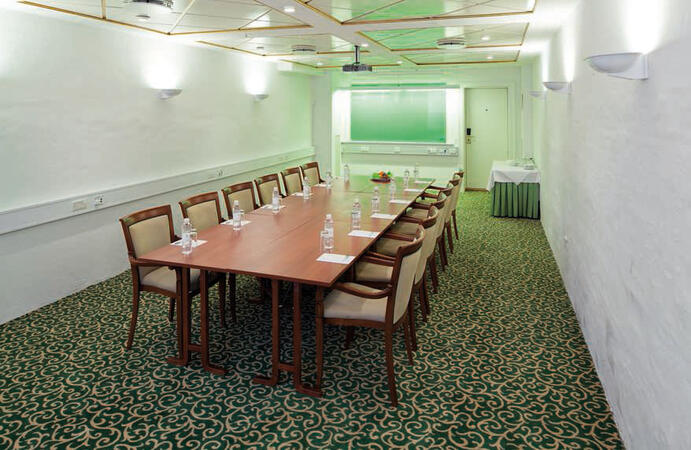
Available either online or on-site, our instructor-led live Cloud Computing training programs emphasize hands-on practice to demonstrate the core principles of cloud technology and how to maximize its benefits for your organization.
We offer Cloud Computing training in two formats: "online live training" and "onsite live training". Online live training, also referred to as "remote live training", is conducted through an interactive remote desktop. For onsite live training, sessions can be delivered directly at your customer premises in Copenhagen or at NobleProg's dedicated corporate training centers located in Copenhagen.
You can also take bus 26 or 7A and get off around Vesterbros Torv; from there it is a short walk.
By bus
Useful nearby stops include:
Vesterbros Torv (Vesterbrogade) — about 1 minute from the area.
Frederiksberg Allé (Vesterbrogade) — nearby.
Trommesalen (Vesterbrogade) — nearby.
Bus 26 and 7A serve the Vesterbrogade corridor.
København, Copenhagen
NobleProg København, Bredgade 37, København K, denmark, 1260
Near Amalienborg Palace & Royal Theatre.
If you arrive by train
If you arrive at Copenhagen Central Station (København H):
Walk to København H Metro.
Take the M3 or M4 metro toward Kongens Nytorv.
Get off at Kongens Nytorv.
Walk north toward Nyhavn, then continue along Bredgade.
Bredgade 37 is about 500 m / 6 minutes' walk from Kongens Nytorv.
Another easy option
Marmorkirken (Marble Church) Metro Station is also very close to Bredgade 37. The nearby Bredgade area is about 2 minutes' walk from Marmorkirken station.
By bus
There are bus stops around Dronningens Tværgade / Bredgade, so you can also travel by bus and walk the final few minutes.
This live, instructor-led training in Copenhagen (delivered online or onsite) is designed for entry-level data engineers looking to utilize Azure Data Factory to build scalable and efficient cloud-based data integration solutions.
By the end of the course, participants will be able to:
Comprehend the core concepts and architecture of Azure Data Factory (ADF).
Construct, schedule, and monitor data pipelines.
Integrate with multiple data sources, execute transformations, and manage data flows.
Implement best practices for error handling and performance optimization.
Ensure the security and monitoring of data pipelines in production environments.
This live, instructor-led training in Copenhagen (available online or on-site) is tailored for intermediate-level IT professionals aiming to master the skills required to deploy, manage, and operate workloads on Google Cloud while preparing for the Google Certified Associate Cloud Engineer certification.
Upon completion, participants will be equipped to:
Establish and oversee Google Cloud projects, resources, networking, and storage services.
Deploy and manage applications using Compute Engine, Google Kubernetes Engine (GKE), Cloud Run, and App Engine.
Implement identity and access management, security controls, and comprehensive billing budgets, alerts, and cost monitoring.
Automate the provisioning of cloud infrastructure using Terraform and Cloud Build.
Optimize, monitor, and troubleshoot Google Cloud environments using Cloud Monitoring and Cloud Logging.
Leverage Vertex AI and other Google Cloud AI services to address common business and operational needs.
This live, instructor-led training in Copenhagen explores the essential principles and practical applications of Google Colab Pro. It empowers participants to develop hands-on competencies in scalable Python and AI workflows, directly addressing real-world professional demands and modern business objectives.
This instructor-led live training in Copenhagen (online or on-site) is tailored for intermediate-level data scientists and healthcare professionals looking to harness AI for advanced healthcare applications using Google Colab.
By the end of the session, participants will be able to:
Deploy AI models for healthcare using Google Colab.
Apply AI to predictive modeling within healthcare datasets.
Utilize AI-driven methods to analyze medical images.
Examine the ethical implications of AI-based healthcare solutions.
This live, instructor-led session, conducted in Copenhagen (either online or on-site), is specifically tailored for intermediate-level data scientists and engineers seeking to harness Google Colab and Apache Spark for efficient big data processing and analytics.
By the conclusion of this training, participants will be equipped to:
Establish a big data environment leveraging Google Colab and Spark.
Effectively process and analyze extensive datasets using Apache Spark.
Visualize big data insights within a collaborative workspace.
This instructor-led, live training in Copenhagen (delivered online or onsite) is designed for beginner-level system administrators seeking to master the essential concepts and hands-on skills needed to effectively manage and optimize Nutanix environments.
By the conclusion of the training, participants will be able to:
Understand the Nutanix Enterprise Cloud Platform and its components.
Install, configure, and manage Nutanix Clusters.
Build proficiency in administering the Acropolis Hypervisor (AHV).
Handle advanced management tasks and troubleshooting scenarios.
Implement best practices for high availability, disaster recovery, and security.
This live, instructor-led training held in Copenhagen (either online or on-site) is designed for intermediate data professionals aiming to apply time series forecasting techniques to practical datasets via Google Colab.
By the conclusion of this training, attendees will have the ability to:
Comprehend the essentials of time series analysis.
Utilize Google Colab for processing time series data.
Implement ARIMA models for trend prediction.
Apply Facebook’s Prophet library for flexible forecasting.
Create visual representations of time series data and forecast outcomes.
This instructor-led, live training in Copenhagen (online or onsite) is designed for entry-level IT specialists who aim to manage and operate the Google Cloud Platform.
By the conclusion of this training, participants will have the ability to:
Comprehend the essential services and infrastructure of GCP.
Acquire skills in managing networks and virtual machines.
Apply and understand general security best practices in GCP.
Explore Kubernetes and container management capabilities in GCP.
Understand storage options and their configuration methods.
This instructor-led live training in Copenhagen (online or onsite) is designed for advanced professionals seeking to deepen their expertise in reinforcement learning and its practical application in AI development using Google Colab.
By the end of the session, participants will be equipped to:
Understand the core principles of reinforcement learning algorithms.
Implement RL models using TensorFlow and OpenAI Gym.
Develop intelligent agents that learn via trial and error.
Optimize agent performance using advanced techniques like Q-learning and deep Q-networks (DQNs).
Train agents in simulated environments with OpenAI Gym.
Deploy reinforcement learning models for real-world applications.
This instructor-led live training in Copenhagen (available online or on-site) is designed for advanced professionals aiming to refine their computer vision knowledge and utilize TensorFlow's capabilities for building sophisticated vision models through Google Colab.
By the end of this training, participants will be able to:
Construct and train convolutional neural networks (CNNs) using TensorFlow.
Leverage Google Colab for scalable and efficient cloud-based model development.
Implement image preprocessing techniques for computer vision tasks.
Deploy computer vision models for real-world applications.
Use transfer learning to enhance the performance of CNN models.
Visualize and interpret the results of image classification models.
This live, instructor-led session in Copenhagen (available online or in-person) is designed for advanced professionals looking to expand their command of machine learning models, refine their hyperparameter tuning capabilities, and master effective model deployment strategies using Google Colab.
Upon completion, participants will be equipped to:
Construct advanced machine learning systems utilizing frameworks such as Scikit-learn and TensorFlow.
Enhance model efficacy via rigorous hyperparameter tuning.
Release machine learning solutions for practical application using Google Colab.
Coordinate and oversee large-scale machine learning initiatives within the Google Colab ecosystem.
This comprehensive, instructor-led training in Copenhagen delves into foundational cloud principles, Azure administration, and AWS architecture. Learners will acquire practical skills in computing, networking, and security while preparing for multiple globally recognized certifications.
This instructor-led live training, delivered Copenhagen (either online or onsite), is tailored for intermediate data scientists and developers seeking to apply NLP techniques via Python in Google Colab.
Upon completion, participants will be able to:
Comprehend the fundamental concepts of natural language processing.
Process and refine text data for NLP tasks.
Apply sentiment analysis using the NLTK and SpaCy libraries.
Utilize Google Colab for scalable, collaborative text data development.
This instructor-led, live training, delivered in Copenhagen (either online or on-site), is designed for intermediate-level data scientists and developers seeking to master deep learning techniques within the Google Colab environment.
By the end of the session, participants will have acquired the skills to:
Set up and maneuver through Google Colab for deep learning initiatives.
Comprehend the basic principles of neural networks.
Construct deep learning models using TensorFlow.
Train and evaluate deep learning models.
Apply advanced TensorFlow features for deep learning.
This instructor-led live training, offered in Copenhagen (either online or onsite), is designed for intermediate-level data engineers, cloud architects, and business intelligence professionals aiming to master data management within industry-specific cloud environments.
By the end of this session, participants will be able to:
Understand the foundational principles and components of data fabrics.
Design and implement effective data integration and orchestration solutions.
Maintain high standards of data quality and governance within industry cloud platforms.
Utilize data fabrics to drive industry-specific analysis and informed decision-making.
Stay abreast of emerging trends and technological advancements in cloud data management.
This instructor-led course on Copenhagen delves into the essential principles and practical foundations of VMware vSphere 8. By utilizing extensive laboratory exercises and scenario-based tasks, it equips participants with the real-world skills necessary to meet modern business requirements.
This live, instructor-led training in Copenhagen (delivered online or onsite) is designed for entry-level IT professionals, business analysts, and project managers looking to master the basics of cloud computing and its industry-wide applications.
By the conclusion of this training, participants will be capable of:
Identifying the essential attributes and benefits of cloud computing.
Distinguishing between different cloud service and deployment models.
Understanding the significance of industry-specific cloud solutions.
Evaluating the security and compliance dimensions of cloud platforms.
Exploring new trends and future developments in cloud technology.
This instructor-led, live training in Copenhagen (delivered online or on-site) is designed for intermediate cloud engineers and operations managers seeking to refine their cloud infrastructure management using Kubiya AI.
By the conclusion of this training, participants will have acquired the ability to:
Integrate Kubiya AI into their cloud infrastructure.
Automate cloud resource provisioning and administrative tasks.
Optimize cloud expenditures using AI-powered analytics.
Enhance cloud security through AI-driven monitoring.
This instructor-led, live training in Copenhagen (online or onsite) targets intermediate-level data scientists and developers looking to apply machine learning algorithms efficiently via the Google Colab environment.
By the conclusion of this training, participants will possess the ability to:
Set up and navigate Google Colab for machine learning projects.
Understand and apply various machine learning algorithms.
Use libraries like Scikit-learn to analyze and predict data.
Implement supervised and unsupervised learning models.
Optimize and evaluate machine learning models effectively.
This 35-hour course in Copenhagen focuses on advanced VMware vSphere operations, with an emphasis on security, performance, and scalability. Tailored for intermediate IT professionals, it features hands-on labs covering encryption, RBAC, and lifecycle management to help optimize large-scale environments with both efficiency and security in mind.
This live, instructor-led session, held in Copenhagen (online or on-site), is curated for entry-level data scientists aiming to acquire the skills necessary to produce significant and visually compelling data graphics.
By the conclusion of this program, participants will be able to:
Establish and navigate Google Colab for visualisation purposes.
Produce a variety of plot styles using Matplotlib.
Leverage Seaborn for sophisticated visualisation approaches.
Adjust plot elements to enhance presentation and readability.
Decode and display data insights using visual instruments.
This instructor-led live course held in Copenhagen delves into the essential principles and practical basics of VMware vSphere. It empowers participants to cultivate hands-on competencies that are directly applicable to contemporary business requirements and real-world professional settings, spanning from ESXi installation to the management of networking services.
This live, instructor-guided training in Copenhagen, available online or on-site, is tailored for senior professionals looking to enhance their DevOps expertise and optimize development processes through AWS Cloud9.
By the conclusion of this training, participants will be able to:
Configure AWS Cloud9 for DevOps workflows.
Construct CI/CD pipelines.
Automate testing, monitoring, and deployments with AWS Cloud9.
Integrate AWS services like Lambda, EC2, and S3 into DevOps streams.
Apply source control tools such as GitHub or GitLab within AWS Cloud9.
This instructor-led live training, available in Copenhagen (either online or onsite), is tailored for entry-level developers and data analysts seeking to acquire Python programming skills from the start by leveraging Google Colab.
Following the completion of this training, participants will be capable of:
Comprehending the core principles of Python programming.
Running Python scripts within the Google Colab platform.
Employing control structures to direct program execution.
Crafting functions to streamline code organization and reuse.
Discovering and utilizing essential Python libraries.
This instructor-led workshop in Copenhagen provides IT professionals with the key competencies needed to diagnose and resolve intricate VMware vSphere issues. Participants will gain mastery in troubleshooting VMs, networking, and storage through hands-on labs, with an emphasis on root cause analysis to maintain resilient infrastructure.
This instructor-led, live training in Copenhagen (delivered online or onsite) is tailored for intermediate to advanced-level integration developers and system administrators looking to acquire advanced Boomi skills for building, managing, and deploying cloud-based solutions on integration platforms.
By the conclusion of this course, participants will be capable of:
Using AtomSphere and managing Boomi documents.
Designing sophisticated integration processes with advanced logic and data processing.
Administering the deployment of integration processes, along with logging and reporting.
Identifying and managing errors effectively.
Applying best practices and proven techniques for Boomi integrations.
This live, instructor-led training in Copenhagen (online or onsite) is designed for beginner-level data scientists and IT professionals seeking to learn the basics of data science with Google Colab.
Upon completing this training, participants will be equipped to:
Configure and navigate the Google Colab interface.
Develop and execute fundamental Python code.
Import and process datasets.
Generate visualizations using various Python libraries.
This instructor-led live training, offered in Copenhagen (either online or onsite), is tailored for intermediate-level professionals eager to master the effective construction, deployment, and upkeep of serverless applications using AWS Cloud9 and AWS Lambda.
By the conclusion of this training, participants will be able to:
Comprehend the essential elements of serverless architecture.
Prepare AWS Cloud9 for serverless application development.
Develop, test, and deploy serverless applications using AWS Lambda.
Integrate AWS Lambda with other AWS services, including API Gateway and S3.
Refine serverless applications to ensure peak performance and cost efficiency.
This instructor-led, live training in Copenhagen (online or on-site) is designed for developers, system administrators, and cloud professionals looking to acquire hands-on expertise in OpenNebula for their cloud projects.
By the end of the course, attendees will be able to:
Set up a development environment that includes OpenNebula.
Create and manage virtual machines in OpenNebula.
Understand the lifecycle of a virtual machine.
Integrate OpenNebula with existing infrastructure.
Troubleshoot common issues in an OpenNebula environment.
This live, instructor-led session, delivered either online or onsite, is designed for intermediate-level system administrators aiming to utilize VMware vCenter for the control of complex virtual landscapes.
By the conclusion of this training, participants will have the capability to:
Comprehend the architecture and constituent parts of VMware vSphere and vCenter Server.
Execute the installation, configuration, and management of VMware ESXi and vCenter Server.
Apply advanced networking and storage settings.
Create, oversee, and move virtual machines.
Maintain high availability and disaster recovery resilience in virtualized contexts.
Streamline vSphere tasks and control lifecycle and upgrade processes.
Resolve common problems and adhere to best practices.
This practical OpenStack Management course in Copenhagen blends theoretical knowledge with a 75% hands-on workshop to explore key components such as Keystone, Nova, and Neutron. You will develop strong skills in cloud operations and management, applying your knowledge directly to realistic scenarios.
This comprehensive OpenStack Bootcamp in Copenhagen offers hands-on training focused on private cloud management. It covers core components, troubleshooting, and advanced topics, preparing you for certification and real-world deployment with 75% of the time dedicated to practical workshops.
This intensive OpenStack training delivers practical, hands-on expertise in deploying, managing, troubleshooting, and optimizing private cloud environments built on OpenStack. Structured as an extended bootcamp, the curriculum addresses core administrative tasks, real-world troubleshooting scenarios, and advanced architectural concepts aligned with the Certified OpenStack Administrator exam objectives. With 75% of the learning experience dedicated to workshops in a live OpenStack lab, participants develop the necessary skills to confidently administer and evolve enterprise-grade OpenStack infrastructures.
This comprehensive OpenStack networking course in Copenhagen examines core projects including Neutron, OVN, and OpenFlow. It addresses cloud architecture and virtual network infrastructure, with a focus on OVN backends and OpenFlow flows to assist participants in developing practical, real-world networking skills.
This instructor-led live training, delivered in Copenhagen (either on-site or remotely), is tailored for engineers seeking to deploy and manage IoT devices on AWS.
By the end of the course, participants will be equipped to build an IoT platform encompassing the deployment and management of backends, gateways, and devices on the AWS platform.
This instructor-led, live training in Copenhagen, offered onsite or remotely, targets developers who aim to leverage AWS Lambda for building and deploying services and applications to the cloud, without the need to manage the execution environment, such as servers, VMs, containers, availability, scalability, or storage.
By the end of this training, participants will be able to:
Configure AWS Lambda to execute a function.
Understand FaaS (Functions as a Service) and the advantages of serverless development.
Build, upload, and execute AWS Lambda functions.
Integrate Lambda functions with different event sources.
Package, deploy, monitor, and troubleshoot Lambda-based applications.
This live, instructor-led training in Copenhagen (available online or onsite) is designed for integration developers, system administrators, and system integrators who intend to employ Boomi for the creation, management, and deployment of integration platforms for cloud-based solutions.
Upon completing this training, participants will be able to:
Set up the necessary environment to begin building integrations with Boomi.
Understand the features, architecture, and core concepts of Boomi AtomSphere.
Learn how to design, build, and deploy integration processes using Boomi.
Utilize Boomi’s dashboard and reporting tools to monitor applications.
Manage configurations and deployments for Atom, Molecule, and Atom Cloud.
Enable and manage web services and API integrations with Boomi.
This Copenhagen training covers the fundamentals of cloud computing, including virtualization, hypervisors, and distributed architectures. Participants will engage in hands-on activities with AWS, Azure, and Google Cloud, learning to design high-availability solutions and optimize costs for modern infrastructure requirements.
Over the course of seven days, this intensive programme offers a practical, immersive experience in the design, deployment, and operation of cloud-native applications through modern DevOps methodologies.
Learners will delve into constructing highly scalable microservice architectures, refining container environments, and orchestrating production workloads within Kubernetes. The curriculum addresses sophisticated deployment strategies, GitOps-driven automation, and observability standards essential for maintaining system reliability and peak performance.
Particular emphasis is placed on tackling real-world operational hurdles, such as incident management, failure simulation, and detailed root cause analysis. The programme culminates with the application of AI-driven tools to streamline troubleshooting and expedite operational decision-making.
Upon completion, participants will possess a robust comprehension of how to construct, deploy, monitor, and sustain resilient distributed systems within a Kubernetes ecosystem.
This course aims to equip non-technical professionals—such as managers, business analysts, QA testers, and operations staff—with a solid foundation in cloud computing. Learners will delve into key concepts, advantages, and real-world uses of the cloud to make better-informed decisions and play an effective role in cloud migration efforts. The curriculum focuses on clarifying complex cloud terminology, contrasting cloud and on-premise infrastructure, understanding service models, and recognizing the impact of the cloud on different roles within an organization.
Upon completing this course, participants will be able to:
Comprehend the fundamental definitions and terminology of cloud computing
Identify various cloud service models (IaaS, PaaS, SaaS)
Distinguish between cloud deployment models (Public, Private, Hybrid, Multi-Cloud)
Contrast on-premises and cloud-based infrastructure
Understand cloud benefits such as scalability, agility, availability, and cost-efficiency
Recognize major cloud platforms (AWS, Azure, GCP) and their respective service offerings
Understand cloud accountability: the shared responsibility model and role-based access
Understand how the cloud affects software testing, deployment, and monitoring
Engage effectively in cloud adoption and migration projects
Understand the basics of cloud security, compliance, and governance principles
This 3-day training program aims to equip participants with a robust foundation in cloud computing principles, complemented by practical experience with the industry's leading platforms: AWS, Microsoft Azure, and Google Cloud Platform (GCP). The curriculum is organized into four sessions, each dedicated to a specific major cloud platform, beginning with a comprehensive overview of general cloud computing concepts. Upon completion, participants will possess a thorough understanding of cloud fundamentals, practical knowledge of each platform's architecture and services, and the necessary skills to deploy and manage resources in practical, real-world environments.
This instructor-led live training, conducted in Copenhagen (online or onsite), is tailored for IT architects and IT consultants aiming to apply best practices in cloud infrastructure and services.
By the end of the session, participants will be able to:
Utilise cloud infrastructure and services for business deployment.
Apply advanced cloud security principles in accordance with Cloud Security Alliance standards.
Migrate legacy systems to the cloud using SOA and PaaS synergies.
Automate on-demand resource provisioning for asynchronous cloud services.
Establish a solid base in the design and administration of resilient edge computing infrastructures. Gain insight into open hybrid cloud structures, workload management across various cloud platforms, and strategies for ensuring flexibility and redundancy. This course delivers essential knowledge for creating scalable and secure infrastructure that supports the dynamic demands of modern applications through edge computing.
This live, instructor-led training, conducted Copenhagen (either online or on-site), targets cloud administrators, cloud architects, technology leaders, and financial analysts aiming to manage, monitor, and process their organization's financial assets in the cloud.
By the end of the program, participants will be proficient in applying FinOps practices to forecast costs, optimize workflows, and execute financial management operations within the cloud.
This live, instructor-led training in Copenhagen is tailored for business professionals seeking to prepare for the Google Cloud Digital Leader certification at a foundational level.
By the end of the training, participants will be able to:
Explain how Google Cloud drives digital and data transformation.
Describe Google Cloud's AI/ML, infrastructure, security, and operations capabilities from a business standpoint.
Prepare for the certification exam through mock questions and structured review.
Build practical IoT expertise in this 8-hour instructor-led session located in Copenhagen. Participants will examine IoT architecture, MQTT protocols, and integration with AWS IoT Core. Practical workshops cover constructing smart devices with Raspberry Pi, connecting them to the AWS cloud, and effectively visualizing sensor data.
This instructor-led, live training in Copenhagen (online or onsite) is aimed at intermediate-level IT professionals and technology decision-makers who wish to use open-source platforms and open standards to design portable, resilient, and sovereign software environments.
By the end of this training, participants will be able to: explain digital sovereignty concepts, assess portability risks, evaluate Kubernetes and open-source platform options, and define practical adoption steps.
This program offers a thorough examination of the OpenStack ecosystem. It begins with a foundational introduction to the system, followed by practical, hands-on workshops focused on managing private clouds. The curriculum concludes with advanced architectural discussions and troubleshooting techniques. The primary objective is to provide a robust understanding of OpenStack, establishing a strong foundation for future cloud expansion and refinement. This course covers all topics required to successfully pass the OpenStack Administrator certification exam.
This live, instructor-led session (conducted online or on-site) is designed for system administrators and infrastructure engineers aspiring to structure, implement, and manage private OpenStack cloud infrastructure for enterprise contexts.
By the conclusion of this program, participants will possess the ability to interpret OpenStack architecture, deploy private cloud foundations, manage compute and storage assets, enforce security via Keystone, and execute enterprise best practices.
This live, instructor-led training in Copenhagen, offered online or on-site, is tailored for intermediate-level IT leaders, architects, and governance professionals seeking to leverage sovereign cloud strategy principles to design governance models, select appropriate architectures, and prepare realistic exit plans.
By the end of the session, participants will be able to: define sovereignty requirements, assess architectural options, establish governance controls, and construct a practical exit roadmap.
This live, instructor-led training in Copenhagen (available online or onsite) is tailored for intermediate-level virtualization administrators seeking to migrate away from VMware using open-source platforms.
By the end of this training, participants will be able to:
Install and configure KVM, oVirt, and Proxmox VE.
Migrate virtual workloads from VMware.
Implement high availability and disaster recovery mechanisms.
Optimize performance within open-source virtualization environments.
Read more...
Last Updated:
Testimonials (9)
Caring for everyone's needs
Gabriel Mototolea - OSE
Course - Cloud Fundamentals
pacing for the most part was fantastic. Michal was very good at ensuring the audience were engaged and ensured everyone was following along for the most part
Asif Shaikh - Carpmaels & Ransford
Course - Terraform on Microsoft Azure
All of the training was great. Especially liked the training documentation to reference. Looking forward to the Advanced Training, when we are ready.
Amy Gregg - Qualfon
Course - Boomi Integration Fundamentals
Checking all the details in practice - by writing real code
Michal Pipala - EY
Course - Advanced Terraform: Efficient Infrastructure as Code
The part of the LAB. Trying failing redo success ... Is needed for courage that is needed to work with Nutanix.
Course - Terraform for Managing Cloud Infrastructure
The practical examples and going above and beyond with them.
Anamaria-Daniela Sprinceana
Course - Terraform : Advanced
It was a really good training course, well prepared and explained by the trainer with great hands on experience on GCP.
Mircea
Course - Google Cloud Platform Basics and Management
Ahmed's knowledge on the topics presented. The fact that he could provide real life examples and simplify abstract concepts in a manner that made the entire training very enjoyable.
Aurelian
Course - Cloud Essentials: Understanding the Fundamentals of Cloud Computing for Non-Developers
Online Cloud Computing training in Copenhagen, Cloud Computing training courses in Copenhagen, Weekend Cloud Computing courses in Copenhagen, Evening Cloud Computing training in Copenhagen, Cloud Computing instructor-led in Copenhagen, Cloud Computing coaching in Copenhagen, Cloud Computing instructor in Copenhagen, Cloud Computing on-site in Copenhagen, Evening Cloud Computing courses in Copenhagen, Cloud Computing boot camp in Copenhagen, Cloud Computing private courses in Copenhagen, Cloud Computing one on one training in Copenhagen, Cloud Computing classes in Copenhagen, Weekend Cloud Computing training in Copenhagen, Online Cloud Computing training in Copenhagen, Cloud Computing trainer in Copenhagen, Cloud Computing instructor-led in Copenhagen