Whether delivered online or on-site, our instructor-led live Machine Learning (ML) training courses focus on practical, hands-on exercises to demonstrate how machine learning techniques and tools can be applied to solve real-world challenges across various sectors. NobleProg’s ML curriculum spans a wide range of programming languages and frameworks, including Python, R, and Matlab. These courses are tailored for specific industry applications, such as Finance, Banking, and Insurance, covering everything from the fundamentals of Machine Learning to advanced methodologies like Deep Learning.
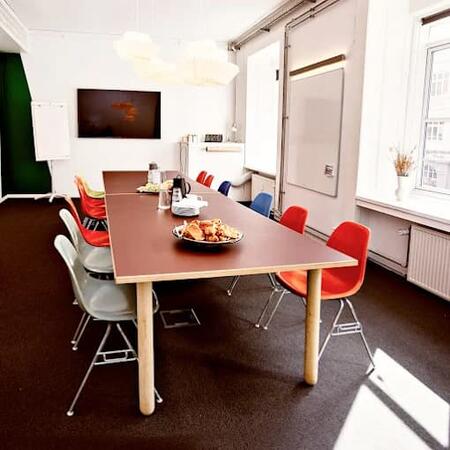
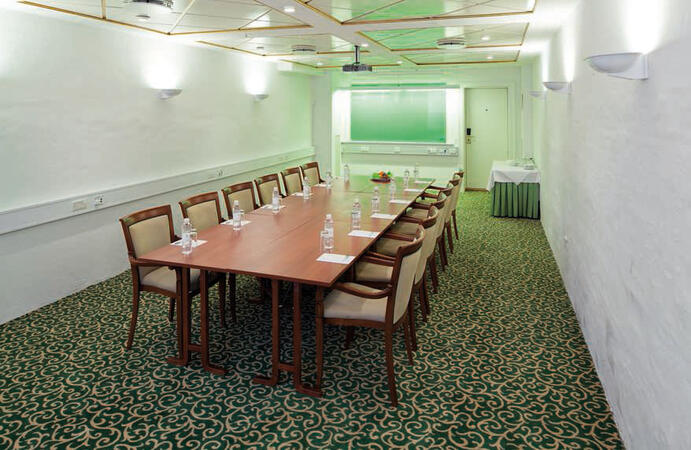
We offer Machine Learning training as either "online live training" or "onsite live training". Online live training, also referred to as "remote live training", is conducted through an interactive remote desktop environment. Onsite live training takes place directly at customer premises in Copenhagen or within NobleProg’s corporate training centers in Copenhagen.
You can also take bus 26 or 7A and get off around Vesterbros Torv; from there it is a short walk.
By bus
Useful nearby stops include:
Vesterbros Torv (Vesterbrogade) — about 1 minute from the area.
Frederiksberg Allé (Vesterbrogade) — nearby.
Trommesalen (Vesterbrogade) — nearby.
Bus 26 and 7A serve the Vesterbrogade corridor.
København, Copenhagen
NobleProg København, Bredgade 37, København K, denmark, 1260
Near Amalienborg Palace & Royal Theatre.
If you arrive by train
If you arrive at Copenhagen Central Station (København H):
Walk to København H Metro.
Take the M3 or M4 metro toward Kongens Nytorv.
Get off at Kongens Nytorv.
Walk north toward Nyhavn, then continue along Bredgade.
Bredgade 37 is about 500 m / 6 minutes' walk from Kongens Nytorv.
Another easy option
Marmorkirken (Marble Church) Metro Station is also very close to Bredgade 37. The nearby Bredgade area is about 2 minutes' walk from Marmorkirken station.
By bus
There are bus stops around Dronningens Tværgade / Bredgade, so you can also travel by bus and walk the final few minutes.
This live, instructor-led training in Copenhagen (offered online or onsite) is designed for entry-level professionals aiming to master the concept of pre-trained models. It provides the skills necessary to apply these models to solve real-world issues without the requirement of building them from scratch.
By the conclusion of this training, participants will be able to:
Understand the nature and benefits of pre-trained models.
Explore different pre-trained model architectures and their practical uses.
Adjust a pre-trained model to suit specific tasks.
Apply pre-trained models in simple machine learning projects.
This instructor-led, live training in Copenhagen (online or on-site) is intended for participants with varying levels of expertise who aim to utilize Google's AutoML platform to construct customized chatbots for diverse applications.
By the end of this training, participants will be equipped to:
Comprehend the basics of chatbot development.
Navigate the Google Cloud Platform and access AutoML.
Prepare data for training chatbot models.
Train and evaluate custom chatbot models using AutoML.
Deploy and integrate chatbots into various platforms and channels.
Monitor and optimize chatbot performance over time.
This live, instructor-led training, available Copenhagen (online or on-site), is tailored for intermediate-level AI developers, machine learning engineers, and system architects seeking to optimise AI models for edge deployment.
By the end of this session, participants will be equipped to:
Understand the challenges and requirements involved in deploying AI models on edge devices.
Apply model compression techniques to decrease the size and complexity of AI models.
Use quantisation methods to improve model efficiency on edge hardware.
Implement pruning and other optimisation techniques to enhance model performance.
Deploy optimised AI models on diverse edge devices.
This instructor-led, live training in Copenhagen (online or on-site) is designed for intermediate-level developers, data scientists, and tech enthusiasts aiming to acquire practical skills in deploying AI models on edge devices for various applications.
By the end of this training, participants will be able to:
Grasp the principles of Edge AI and its benefits.
Set up and configure the edge computing environment.
Develop, train, and optimize AI models for edge deployment.
Implement practical AI solutions on edge devices.
Evaluate and improve the performance of edge-deployed models.
Address ethical and security considerations in Edge AI applications.
This instructor-led live training, offered in Copenhagen (online or on-site), is tailored for advanced AI engineers and data scientists with intermediate-to-advanced experience who seek to enhance DeepSeek model performance, minimise latency, and deploy AI solutions efficiently using modern MLOps practices.
By the end of the training, participants will be able to:
Optimise DeepSeek models for improved efficiency, accuracy, and scalability.
Apply best practices for MLOps and model versioning.
Deploy DeepSeek models on cloud and on-premise infrastructure.
Monitor, maintain, and scale AI solutions with confidence.
This live training in Copenhagen supports intermediate practitioners in building automated MLOps pipelines on Kubernetes. Learners will design CI/CD workflows, implement GitOps strategies, and deploy ML models using containerized infrastructure to achieve scalable and reproducible machine learning operations.
This hands-on training in Copenhagen provides the necessary skills to build, train, and serve machine learning models on Kubernetes using Kubeflow. You will learn to navigate the ecosystem, author scalable pipelines, and manage production-ready workloads following best practices.
This instructor-led training in Copenhagen empowers advanced professionals to design, optimize, and deploy full-scale TinyML pipelines. Participants will gain the ability to collect data, train low-power models, and validate real-world applications through practical lab work.
This live, instructor-led training, available in Copenhagen either online or onsite, is tailored for intermediate-level developers, data scientists, and AI practitioners seeking to utilize TensorFlow Lite for building Edge AI applications.
Upon completion of this program, participants will be equipped to:
Comprehend the essential components of TensorFlow Lite and its strategic importance in Edge AI.
Construct and optimize AI models leveraging the TensorFlow Lite framework.
Deploy TensorFlow Lite models onto a variety of edge devices.
Employ specific tools and methodologies for model conversion and optimization.
Develop and implement practical Edge AI solutions using TensorFlow Lite.
This live, instructor-led training delivered in Copenhagen (whether online or on-site) is specifically curated for advanced professionals aiming to excel in the technologies governing autonomous systems.
Following this intensive training, attendees will be equipped to:
Construct and deploy AI models focused on autonomous decision-making processes.
Create control algorithms that enable autonomous navigation and robust obstacle avoidance.
Validate the safety and reliability inherent in AI-powered autonomous operations.
Merge autonomous functionalities with current robotics and AI frameworks.
This instructor-led live training in Copenhagen (available online or on-site) is designed for advanced professionals aiming to refine their computer vision knowledge and utilize TensorFlow's capabilities for building sophisticated vision models through Google Colab.
By the end of this training, participants will be able to:
Construct and train convolutional neural networks (CNNs) using TensorFlow.
Leverage Google Colab for scalable and efficient cloud-based model development.
Implement image preprocessing techniques for computer vision tasks.
Deploy computer vision models for real-world applications.
Use transfer learning to enhance the performance of CNN models.
Visualize and interpret the results of image classification models.
This instructor-led training in Copenhagen enables advanced professionals to safeguard TinyML pipelines on edge devices. You will learn to implement privacy-preserving techniques, harden models against adversarial threats, and apply best practices for secure data handling in constrained environments.
This live, instructor-led session in Copenhagen (available online or in-person) is designed for advanced professionals looking to expand their command of machine learning models, refine their hyperparameter tuning capabilities, and master effective model deployment strategies using Google Colab.
Upon completion, participants will be equipped to:
Construct advanced machine learning systems utilizing frameworks such as Scikit-learn and TensorFlow.
Enhance model efficacy via rigorous hyperparameter tuning.
Release machine learning solutions for practical application using Google Colab.
Coordinate and oversee large-scale machine learning initiatives within the Google Colab ecosystem.
This instructor-led live training, delivered either online or on-site, is tailored for intermediate-level professionals seeking to leverage AI techniques to optimize yield management in semiconductor manufacturing.
Upon completion, participants will be equipped to:
Evaluate production data to identify the key factors impacting yield rates.
Utilize AI algorithms to strengthen and optimize yield management procedures.
Adjust production parameters to decrease defects and elevate yield outcomes.
Embed AI-driven yield management practices into established production workflows.
This live, instructor-led training in Copenhagen (available online or onsite) is crafted for intermediate-level business and AI professionals seeking to integrate machine learning into business strategies, forecasting, and AI systems using authentic case studies and Python tools.
By the end of this program, participants will be equipped to:
Understand the alignment of machine learning with AI and overall business strategy.
Apply supervised and unsupervised learning techniques to structured business challenges.
Preprocess and transform data for modeling purposes.
Utilize neural networks for classification and prediction tasks.
Conduct sales forecasting using statistical and ML-based approaches.
Implement clustering and association rule mining for customer segmentation and pattern identification.
This instructor-led, live training delivered in Copenhagen (online or onsite) is tailored for intermediate professionals seeking to leverage AI-driven predictive maintenance in semiconductor manufacturing. The objective is to boost production efficiency while minimizing risks associated with unforeseen equipment failures.
By the end of the program, attendees will have the capability to:
Implement AI models designed to predict equipment failures in semiconductor contexts.
Analyze maintenance datasets to detect patterns and trends that indicate emerging problems.
Integrate AI-powered predictive maintenance into current manufacturing operations.
Decrease downtime and reduce maintenance costs via proactive equipment oversight.
This live, instructor-led training in Copenhagen (online or on-site) is tailored for senior professionals looking to leverage cutting-edge AI techniques to transform semiconductor design automation, thereby boosting efficiency, accuracy, and innovation in chip design and verification.
Once the training is complete, participants will be equipped to:
Apply advanced AI methodologies to refine semiconductor design workflows.
Incorporate machine learning models into EDA frameworks to strengthen design verification.
Create AI-powered solutions to tackle complex design hurdles in chip fabrication.
Utilize neural networks to improve the precision and velocity of design automation.
This instructor-led, live training, delivered in Copenhagen (either online or on-site), is designed for intermediate-level data scientists and developers seeking to master deep learning techniques within the Google Colab environment.
By the end of the session, participants will have acquired the skills to:
Set up and maneuver through Google Colab for deep learning initiatives.
Comprehend the basic principles of neural networks.
Construct deep learning models using TensorFlow.
Train and evaluate deep learning models.
Apply advanced TensorFlow features for deep learning.
This live, instructor-led training session in Copenhagen (online or onsite) is designed for intermediate-level professionals seeking to master the application of AI techniques in optimizing semiconductor fabrication processes.
By the end of this training, participants will be able to:
Comprehend AI methodologies used for process optimization in chip fabrication.
Implement AI models aimed at enhancing yield and reducing defects.
Analyze process data to determine key optimization parameters.
Apply machine learning techniques to fine-tune semiconductor manufacturing processes.
This instructor-led live training in Copenhagen (available online or onsite) is designed for intermediate-level professionals aiming to automate and oversee machine learning workflows, encompassing model training, validation, and deployment using Apache Airflow.
Upon completion of this training, participants will be equipped to:
Configure Apache Airflow for the orchestration of machine learning workflows.
Automate processes for data preprocessing, model training, and validation.
Integrate Airflow with diverse machine learning frameworks and tools.
Deploy machine learning models via automated pipelines.
Monitor and optimize machine learning workflows within production environments.
This instructor-led, live training in Copenhagen (online or onsite) targets intermediate-level data scientists and developers looking to apply machine learning algorithms efficiently via the Google Colab environment.
By the conclusion of this training, participants will possess the ability to:
Set up and navigate Google Colab for machine learning projects.
Understand and apply various machine learning algorithms.
Use libraries like Scikit-learn to analyze and predict data.
Implement supervised and unsupervised learning models.
Optimize and evaluate machine learning models effectively.
This live, instructor-led course in Copenhagen prepares advanced professionals to optimize TinyML models for resource-limited embedded devices. Learners will apply quantization and pruning, build low-latency inference pipelines, and evaluate performance against memory and energy constraints.
This instructor-led, live training in Copenhagen (online or onsite) is designed for advanced professionals aiming to explore state-of-the-art XAI techniques for deep learning models, focusing on the construction of interpretable AI systems.
By the conclusion of this training, participants will be able to:
Understand the complexities and challenges of explainability in deep learning.
Implement advanced XAI techniques for neural networks.
Interpret the decision-making processes of deep learning models.
Evaluate the trade-offs between performance metrics and transparency.
This live, instructor-led course, available online or on-site in Copenhagen, is tailored for beginner-level professionals looking to comprehend and implement AI technologies in the semiconductor manufacturing field.
After completing this training, participants will be able to:
Understand the foundational principles of AI and their relevance to semiconductor manufacturing.
Recognize key areas in semiconductor production suitable for effective AI application.
Leverage AI tools and techniques to boost production efficiency and quality control.
Apply basic AI models to refine and optimize manufacturing processes.
This instructor-led training in Copenhagen walks professionals through the process of containerizing complete ML pipelines with Docker. Participants will gain the skills to build reproducible environments, orchestrate training and inference workloads, and implement CI/CD for scalable MLOps deployments.
This instructor-led, live training in Copenhagen (online or onsite) is designed for data scientists and developers aiming to utilize ML.NET to automatically derive projections from executed data analysis within enterprise applications.
By the end of this training, participants will be able to:
Install ML.NET and integrate it into the application development environment.
Understand the machine learning principles behind ML.NET tools and algorithms.
Build and train machine learning models to perform predictions with the provided data smartly.
Evaluate the performance of a machine learning model using the ML.NET metrics.
Optimize the accuracy of the existing machine learning models based on the ML.NET framework.
Apply the machine learning concepts of ML.NET to other data science applications.
This instructor-led live training, available in Copenhagen (online or onsite), targets intermediate-level data professionals seeking to leverage machine learning techniques for data-driven business solutions, including sales forecasting and neural network-based predictive modeling.
By the conclusion of the training, participants will be equipped to:
Comprehend the core principles and categories of machine learning.
Implement essential algorithms for classification, regression, clustering, and association analysis.
Carry out exploratory data analysis and data preparation in Python.
Apply neural networks to address nonlinear modeling challenges.
Develop predictive analytics models for business forecasting, particularly for sales data.
Evaluate and optimize model performance using visual and statistical tools.
This instructor-led, live training in Copenhagen (delivered online or onsite) is targeted at intermediate to advanced data scientists, machine learning engineers, deep learning researchers, and computer vision specialists who aim to broaden their knowledge and skills in deep learning for text-to-image generation.
Upon completion of this training, participants will be equipped to:
Grasp the advanced deep learning architectures and methodologies used for text-to-image generation.
Implement sophisticated models and optimisations to achieve high-quality image synthesis.
Enhance performance and scalability for large-scale datasets and complex model structures.
Adjust hyperparameters to improve model efficacy and generalisation.
Integrate Stable Diffusion with other deep learning frameworks and toolsets.
This instructor-led live training in Copenhagen (available online or in person) is designed for cybersecurity professionals at intermediate to advanced levels seeking to refine their capabilities in AI-driven threat identification and incident management.
By the conclusion of this program, participants will be able to:
Implement advanced AI algorithms for real-time threat identification.
Customize AI models to suit specific cybersecurity requirements.
Develop automated workflows for threat response.
Defend AI-based security tools against adversarial attacks.
This instructor-led live training, delivered in Copenhagen (online or onsite), is tailored for intermediate-level embedded systems engineers and AI developers aiming to implement machine learning models on microcontrollers using TensorFlow Lite and Edge Impulse.
Upon completion, participants will be capable of:
Grasping the core principles of TinyML and its advantages for edge AI applications.
Configuring a development environment tailored for TinyML projects.
Training, refining, and implementing AI models on low-power microcontrollers.
Leveraging TensorFlow Lite and Edge Impulse to build practical TinyML solutions.
Optimizing AI models to meet power efficiency and memory limitations.
This live, instructor-led training offered in Copenhagen (either online or on-site) is tailored for entry-level cybersecurity professionals seeking to leverage AI for superior threat detection and response.
By the end of the program, participants will be capable of:
Understanding the application of AI in cybersecurity.
Deploying AI algorithms for threat detection purposes.
Automating incident response workflows using AI tools.
Integrating AI capabilities into existing cybersecurity frameworks.
This instructor-led live training in Copenhagen (online or on-site) is designed for biologists who wish to understand the workings of AlphaFold and utilize its models to guide their experimental studies.
By the end of this session, participants will be able to:
Understand the core principles of AlphaFold.
Learn how the AlphaFold system operates.
Learn how to interpret AlphaFold predictions and outcomes.
This live, instructor-led training in Copenhagen (available online or on-site) is tailored for intermediate-level data analysts aiming to master the use of RapidMiner for value estimation and projection, as well as for employing analytical tools in time series forecasting.
By the end of this program, participants will have the capability to:
Implement the CRISP-DM methodology, select the most appropriate machine learning algorithms, and refine model construction and performance.
Utilize RapidMiner for estimating and projecting values, effectively deploying analytical tools for time series forecasting.
Delivered by a live instructor, this training is offered both online and onsite, targeting data scientists, machine learning engineers, and computer vision researchers who aim to utilize Stable Diffusion for creating high-quality images for numerous use cases.
By the conclusion of the training, participants will be capable of:
Comprehending the core principles of Stable Diffusion and its functionality in image generation.
Developing and training Stable Diffusion models for image generation tasks.
Implementing Stable Diffusion in various scenarios, including inpainting, outpainting, and image-to-image translation.
Enhancing the performance and stability of Stable Diffusion models.
Gain hands-on expertise in applying Machine Learning techniques with Python during this Copenhagen training. The curriculum covers key algorithms such as regression, classification, and clustering, focusing on making informed modeling decisions, interpreting outputs, and validating results through practical, real-world applications.
This hands-on training in Copenhagen enables programmers to construct AI models from the ground up using Python. Learners will gain proficiency in supervised learning, neural networks, and unsupervised techniques by utilizing scikit-learn and Apache Spark. The course emphasizes practical exercises in Jupyter notebooks to address real-world problems.
This instructor-led training in Copenhagen covers the theoretical foundations and practical implementation of Deep Reinforcement Learning using Python. Participants will build and train DRL agents with TensorFlow or PyTorch, applying key algorithms like DQN and PPO to solve complex real-world problems.
An introductory course in Copenhagen covering the basics of AI, from intelligent agents to machine learning. It prepares executives and architects to evaluate emerging AI trends, integrate practical solutions, and boost business agility through automated strategies.
Discover how Machine Learning and Deep Learning are transforming the automotive sector in Denmark. This Copenhagen programme covers essential concepts, from simple automation to autonomous decision-making, including neural networks and practical TensorFlow examples tailored for real-world applications.
This eight-day initiative facilitates a seamless transition from solid Python engineering basics to advanced AI system design. Participants will refine their coding discipline, acquire expertise in statistical and deep learning methodologies, and develop production-grade generative AI and agent-based architectures. The emphasis lies on ensuring reliability, thorough evaluation, safety, and practical deployment, shifting the focus from exploratory experimentation to robust, real-world application.
This three-day program in Copenhagen delves into both the theoretical and practical aspects of Artificial Neural Networks, Machine Learning, and Deep Learning. Participants will examine various network architectures, learning mechanisms, and the underlying mathematical foundations, progressing from fundamental perceptrons to sophisticated deep learning techniques.
Develop hands-on proficiency in Machine Learning, covering Naive Bayes, Decision Trees, Neural Networks, SVMs, and Clustering within this practical Copenhagen course. Enhance your ability to evaluate models, manage bias-variance trade-offs, and apply deep learning principles to deliver reliable predictive solutions.
This instructor-led, live training in Copenhagen (available online or onsite) provides an introductory overview of pattern recognition and machine learning. It covers practical applications in statistics, computer science, signal processing, computer vision, data mining, and bioinformatics.
By the end of this training, participants will be able to:
Apply core statistical methods to pattern recognition.
Utilise key models, such as neural networks and kernel methods, for data analysis.
Implement advanced techniques for solving complex problems.
Improve prediction accuracy by combining different models.
This instructor-led, live training is delivered in Copenhagen (online or on-site) and is targeted at data scientists who aim to utilize TensorFlow for analyzing potential fraud data.
Upon completion, participants will be equipped to:
Develop a fraud detection model using Python and TensorFlow.
Construct linear regression models to effectively predict fraudulent behavior.
Engineer a comprehensive, end-to-end AI application tailored for fraud data analysis.
This live, instructor-led training in Copenhagen delves into the fundamentals of AI, machine learning, and deep learning. Participants will leverage Python, Keras, and TensorFlow to construct practical models for the telecom sector, including credit risk and churn prediction, thereby acquiring hands-on skills essential for real-world data science applications.
This practical, instructor-led training acts as a direct follow-up to the Python for Data Analysis course.
It provides an introduction to the key concepts of Machine Learning, demonstrating their direct application to data analysis tasks like prediction, classification, and segmentation.
Emphasis is placed on practical application using tools such as Python, Pandas, and Jupyter Notebook, ensuring no advanced mathematical background is necessary.
This live, instructor-led training in Copenhagen (delivered online or onsite) is designed for developers and data scientists aiming to build, deploy, and manage machine learning workflows on Kubernetes.
Once this training concludes, participants will possess the ability to:
Set up and configure Kubeflow in both on-premise and cloud environments.
Develop, deploy, and control ML workflows that rely on Docker containers and Kubernetes.
Operate full machine learning pipelines across a variety of architectures and cloud platforms.
Utilize Kubeflow to create and manage Jupyter notebooks.
Construct ML training, hyperparameter tuning, and serving workloads that operate across multiple platforms.
This instructor-led, live training in Copenhagen (online or onsite) is designed for engineers looking to evaluate current approaches and tools. It empowers participants to make intelligent decisions about adopting MLOps within their organization.
By the end of this training, participants will be able to:
Install and configure various MLOps frameworks and tools.
Assemble the right kind of team with the right skills for constructing and supporting an MLOps system.
Prepare, validate, and version data for use by ML models.
Understand the components of an ML Pipeline and the tools needed to build one.
Experiment with different machine learning frameworks and servers for production deployment.
Operationalize the entire Machine Learning process so that it is reproducible and maintainable.
This professionally guided, live training in Copenhagen (offered online or on-site) is tailored for intermediate-level data analysts, developers, and prospective data scientists seeking to utilize Python for machine learning to extract insights, generate predictions, and automate data-based decisions.
By the conclusion of this course, participants will be capable of:
Understanding and differentiating key machine learning paradigms.
Examining data preprocessing techniques and model assessment metrics.
Applying machine learning algorithms to resolve real-world data issues.
Utilizing Python libraries and Jupyter notebooks for practical development.
Developing models for forecasting, categorization, recommendation, and clustering.
This instructor-led live training, offered online or on-site at Copenhagen, is designed for developers and data scientists who aim to utilize TensorFlow 2.x for building predictors, classifiers, generative models, neural networks, and more.
By the conclusion of this program, participants will be capable of:
Installing and configuring TensorFlow 2.x.
Understanding the benefits TensorFlow 2.x provides over previous iterations.
Building deep learning models.
Implementing an advanced image classifier.
Deploying deep learning models to cloud environments, mobile devices, and IoT systems.
This 35-hour course in Copenhagen explores the fundamentals of deep neural networks, covering CNNs, RNNs, and generative models such as GANs. Learners will gain practical, hands-on experience with Theano and TensorFlow, mastering how to build, train, and deploy production-grade deep learning models for real-world applications.
Read more...
Last Updated:
Testimonials (5)
The exercises
Gianluca Bovo - Urmet
Course - Security and Privacy in TinyML Applications
I thoroughly enjoyed the training and appreciated the deeper dive into the subject of Machine Learning. I appreciated the balance between theory and practical applications, especially the hands-on coding sessions. The trainer provided engaging examples and well-designed exercises that enhanced the learning experience. The course covered a wide range of topics, and Abhi demonstrated excellent expertise by answering all questions with clarity and ease.
Valentina
Course - Machine Learning
The training provided an interesting overview of deep learning models and related methods. The topic was quite new to me, but now I feel like I actually have an idea of what AI and ML can involve, what these terms consist of and how they can be used advantageously. In general, I liked the approach of starting with the statistical background and the basic learning models, such as linear regression, especially emphasizing the exercises in between.
Konstantin - REGNOLOGY ROMANIA S.R.L.
Course - Fundamentals of Artificial Intelligence (AI) and Machine Learning
Online Machine Learning training in Copenhagen, Machine Learning training courses in Copenhagen, Weekend ML (Machine Learning) courses in Copenhagen, Evening ML (Machine Learning) training in Copenhagen, Machine Learning (ML) instructor-led in Copenhagen, ML (Machine Learning) on-site in Copenhagen, Machine Learning (ML) instructor-led in Copenhagen, Machine Learning (ML) classes in Copenhagen, ML (Machine Learning) private courses in Copenhagen, Machine Learning (ML) coaching in Copenhagen, Weekend ML (Machine Learning) training in Copenhagen, Evening Machine Learning (ML) courses in Copenhagen, Online Machine Learning (ML) training in Copenhagen, Machine Learning boot camp in Copenhagen, ML (Machine Learning) instructor in Copenhagen, Machine Learning trainer in Copenhagen, Machine Learning one on one training in Copenhagen