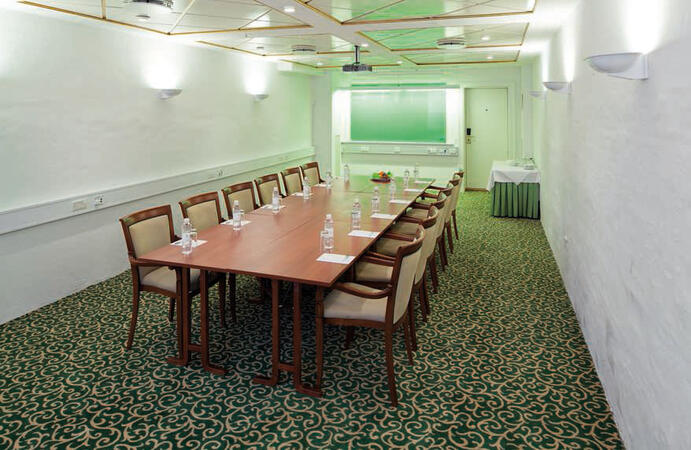
Whether delivered online or on-site, our instructor-led live Java training courses emphasize hands-on practice to teach you how to build applications effectively using Java.
Java training is offered as either "online live training" or "onsite live training". Online live training (also known as "remote live training") is conducted through an interactive remote desktop. Onsite live training can be hosted locally at your customer premises in Copenhagen or within NobleProg's corporate training centers in Copenhagen.
You can also take bus 26 or 7A and get off around Vesterbros Torv; from there it is a short walk.
By bus
Useful nearby stops include:
Vesterbros Torv (Vesterbrogade) — about 1 minute from the area.
Frederiksberg Allé (Vesterbrogade) — nearby.
Trommesalen (Vesterbrogade) — nearby.
Bus 26 and 7A serve the Vesterbrogade corridor.
København, Copenhagen
NobleProg København, Bredgade 37, København K, denmark, 1260
Near Amalienborg Palace & Royal Theatre.
If you arrive by train
If you arrive at Copenhagen Central Station (København H):
Walk to København H Metro.
Take the M3 or M4 metro toward Kongens Nytorv.
Get off at Kongens Nytorv.
Walk north toward Nyhavn, then continue along Bredgade.
Bredgade 37 is about 500 m / 6 minutes' walk from Kongens Nytorv.
Another easy option
Marmorkirken (Marble Church) Metro Station is also very close to Bredgade 37. The nearby Bredgade area is about 2 minutes' walk from Marmorkirken station.
By bus
There are bus stops around Dronningens Tværgade / Bredgade, so you can also travel by bus and walk the final few minutes.
Conducted as an instructor-led, live training in Copenhagen (either online or onsite), this course targets intermediate-level Java developers who are eager to investigate the latest Java 21 features, refine their coding methods, and effectively build modern Java applications.
By the end of this training, participants will be capable of:
Comprehending and applying the new capabilities introduced in Java 21.
Improving application performance through the use of advanced Java features.
Constructing modular, scalable applications with the help of updated libraries.
Implementing Java 21 best practices to achieve robust and efficient code.
This instructor-led, live training in Copenhagen (online or onsite) is aimed at intermediate-level Java developers who wish to design, develop, deploy, and maintain microservices-based applications using Java frameworks like Spring Boot and Spring Cloud.
By the end of this training, participants will be able to:
Understand the principles and benefits of microservices architecture.
Build and deploy microservices using Java and Spring Boot.
Implement service discovery, configuration management, and API gateways.
Secure, monitor, and scale microservices effectively.
This 35-hour instructor-led training in Copenhagen empowers support engineers to maintain Java-based banking systems. Participants will learn to resolve issues in Java, Unix, and database environments, utilize monitoring tools, and manage release cycles through live simulations and hands-on troubleshooting.
This live session on Copenhagen is tailored for Java developers exploring Spring and Boot 3.5.5. It addresses core concepts such as IoC, AOP, and JPA, featuring practical exercises focused on creating RESTful services, managing transactions, and handling data persistence using Java 21.
This instructor-led, live training in Copenhagen (online or onsite) is aimed at intermediate-level Java developers who wish to apply design patterns to improve software structure, maintainability, and scalability.
By the end of this training, participants will be able to:
Understand the purpose and benefits of design patterns.
Apply Creational, Structural, and Behavioral patterns effectively in Java.
Improve code reusability, scalability, and maintainability.
Refactor existing codebases using design patterns.
This instructor-led, live training in Copenhagen (available online or in-person) is designed for beginner-level developers seeking to master the essentials of Groovy.
By the conclusion of this session, participants will be able to:
Comprehend fundamental programming concepts.
Compose basic Groovy scripts and utilize core language capabilities.
Apply introductory object-oriented programming principles in Groovy.
Employ basic error-handling methods to resolve common programming errors and exceptions.
This live, instructor-led training in Copenhagen (available online or onsite) is curated for intermediate to advanced developers who wish to master microservices development using Spring Boot, Docker, and Kubernetes.
By the end of this program, participants will be able to:
Understand the core principles of microservices architecture.
Create production-ready microservices with Spring Boot.
Appreciate the essential function of Docker in containerizing microservices.
Configure Kubernetes clusters to deploy and orchestrate microservices.
This live, instructor-led training in Copenhagen (online or on-site) is designed for intermediate to advanced developers and architects aiming to build Java native applications and microservices using Quarkus, with a focus on optimizing memory usage and startup performance.
By the end of this course, participants will be able to:
Develop high-performance, lightweight Java native applications using Quarkus.
Build and deploy RESTful services and microservices architectures.
Use GraalVM for native compilation to improve startup time and memory efficiency.
Package and containerize applications for Kubernetes and OpenShift environments.
This live training on Copenhagen empowers Java developers, from novice to intermediate, to build scalable, non-blocking applications using Spring WebFlux. Learners will gain proficiency in reactive programming concepts, database integration, and the deployment of responsive REST APIs through practical, hands-on lab exercises.
This instructor-led live training, offered in Copenhagen (both online and onsite), targets software architects and web developers seeking to integrate RabbitMQ as messaging middleware. It focuses on programming in Java with Spring to construct effective applications.
By the end of this training, participants will be able to:
Develop applications using Java, Spring, and RabbitMQ.
Architect asynchronous, message-driven systems with RabbitMQ.
Implement queues, topics, exchanges, and bindings in RabbitMQ.
This live, instructor-led training in Copenhagen is tailored for individuals keen on mastering Java specifically for test automation. As a concise and intensive programme, it features ample hands-on exercises designed to swiftly equip participants with the core programming skills essential for software automation testing. The curriculum prioritizes Java fundamentals that can be applied directly and immediately to real-world test automation scenarios.
Please note that this course does not provide an in-depth analysis of test automation frameworks like Selenium. It also skips the traditional "Hello World" introductory path, as the focus is strictly on automation rather than general application development. The primary goal is to enable participants to begin working with test automation efficiently. If you already possess strong Java knowledge and prefer to jump directly into Selenium testing, we recommend exploring: Introduction to Selenium (https:\/\/www.nobleprog.com\/introduction-selenium-training).
This advanced Java training in Copenhagen enhances your proficiency in abstract classes, interfaces, and multithreading. You will gain command over I/O operations, serialization, and reflection, while learning to apply design patterns to develop robust, scalable applications that offer improved flexibility and real-world performance.
Develop a comprehensive command of advanced Java security by exploring JEE, web services, and cryptography in Copenhagen. This course offers hands-on exercises for secure coding, enabling developers to effectively identify and mitigate common vulnerabilities and critical flaws in Java applications.
This instructor-led training in Copenhagen concentrates on Apache Groovy, a dynamic JVM language designed to complement Java. Participants will master scripting, closures, meta-programming, and object-oriented programming while developing a sample application through hands-on exercises and practical lab work.
This 28-hour instructor-led Java Fundamentals training in Copenhagen covers core syntax, OOP, collections, exceptions, and I/O. Learners gain hands-on experience with Java concurrency, regular expressions, and the platform environment, building essential skills for real-world development.
In the Copenhagen training, participants will gain insights into the processes and modern tools for creating efficient Java software. The curriculum covers performance-related challenges, benchmarking, profiling, tuning, memory analysis, and performance optimization through collections and IO. Since the instruction focuses on language-level performance, tools, and embedded libraries, the learned concepts and tools are applicable irrespective of the specific technologies used in your project. The tuning section delves into JVM parameters supplied by Oracle.
This instructor-led live training in Copenhagen (available online or on-site) is intended for developers aiming to use Quarkus to build, test, and deploy Java-powered applications while minimizing resource utilization.
Upon completion, participants will be capable of:
Setting up the required development environment to start developing with Quarkus.
Building, compiling, and running applications in native mode with GraalVM.
Using Quarkus tooling and extensions to build native applications with Maven.
Containerizing, executing, and deploying applications using Docker.
This course examines secure coding concepts in Java by applying OWASP methodologies. Participants will learn to recognize web threats, mitigate common attacks such as XSS and CSRF, and adopt robust secure design principles. By attending this practical training in Copenhagen, you can effectively strengthen your application security expertise.
This live, instructor-led training, delivered Copenhagen (either online or onsite), is designed for web developers aiming to build comprehensive front-end and back-end web applications with Spring Boot, React, and Redux.
By the end of this session, participants will be capable of:
Creating front-end applications using React and Redux.
Developing RESTful APIs with Spring Boot.
Securing web services via Spring Security and JWT tokens.
This instructor-led live training in Copenhagen (available online or on-site) is designed for Java developers aiming to use the Spring 5 framework to develop and deploy enterprise web applications.
By the end of this program, participants will be able to:
Install and configure Spring 5.
Understand and implement the latest features of Spring 5.
Access databases via Spring Application.
Employ WebFlow, the new reactive web framework, to build reactive applications.
Integrate Spring applications with legacy Java EE applications.
Test and deploy enterprise-grade Spring applications.
This practical course offers a hands-on introduction to developing generative AI applications using Spring AI. Learners will discover methods for integrating and configuring AI models, crafting effective prompts, managing structured responses and streaming, and enriching applications with proprietary data through Retrieval-Augmented Generation (RAG).
Additionally, the curriculum addresses conversation memory, AI tools, the Model Context Protocol (MCP), monitoring and observability, security and safeguarding, along with standard generative AI patterns and agentic workflows. Through hands-on exercises, participants will construct and expand Spring AI applications, exploring how to combine these capabilities to deliver robust, production-ready AI solutions.
This live, instructor-led training, available either online or onsite, is tailored for developers seeking to utilize WebFlux for the development and deployment of reactive solutions.
Upon completion of this program, participants will be equipped to:
Install and configure Spring 5 along with the WebFlux framework.
Build reactive applications and associated services.
Read more...
Last Updated:
Testimonials (9)
Setting up Podman for effortlessly working with local containers, as well as using Kafka topics.
- Norfolk Southern
Course - Quarkus for Developers
- The course progression (from JVM internals to more high-level topics)
- Some insights from practical exercises
- Visual style (not some presentation, but a nicely styled page)
Ivan Suvorov - Deutsche Bank
Course - Java Advanced
the knowledge of the trainer was very high - he knew what he was talking about, and knew the answers to our questions
Adam - Fireup.PRO
Course - Advanced Java Security
Trainer was kind and polite, he tried to cover everything and there were a lot of info for 4 days and he did great.
Lucian
Course - Java Fundamentals
The topic is current and I needed to be updated
Damilano Marco - SIAP s.r.l.
Course - Secure Developer Java (Inc OWASP)
The extra information that was shared, the training was not straightforward groovy, which was nice.
Covenant - Vodacom
Course - Groovy Programming
Detailed information provided on the more advanced topics requested.
Farukh Khan - Tandem Solution
Course - RabbitMQ with Java and Spring
The breadth of the topis covered was quite a bit and the trainer tried to do justice to that.
Lakshmipriya Sivakumar - Deque Systems Inc
Course - Spring Boot, React, and Redux
Trainer was good at talking through topics in details and making it easy to understand
Online Java training in Copenhagen, Java training courses in Copenhagen, Weekend Java courses in Copenhagen, Evening Java training in Copenhagen, Java instructor-led in Copenhagen, Java one on one training in Copenhagen, Java instructor-led in Copenhagen, Java instructor in Copenhagen, Java coaching in Copenhagen, Java trainer in Copenhagen, Weekend Java training in Copenhagen, Java on-site in Copenhagen, Java classes in Copenhagen, Java private courses in Copenhagen, Online Java training in Copenhagen, Java boot camp in Copenhagen, Evening Java courses in Copenhagen