Delivered either online or on-site, these instructor-led live Computer Vision training courses guide participants through building simple Computer Vision applications via interactive discussions and hands-on practice.
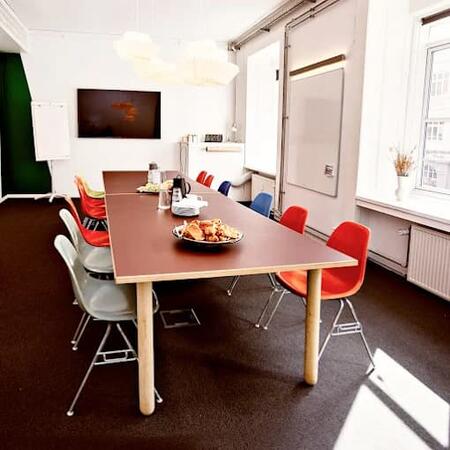
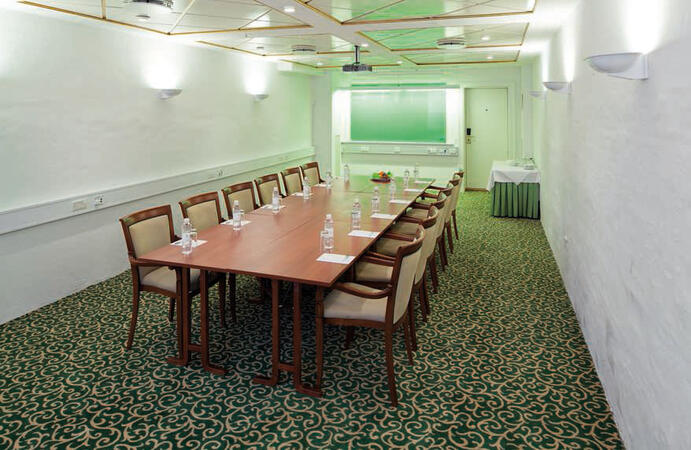
Computer Vision training is offered as either "online live training" or "onsite live training". Online live training, also known as "remote live training", is conducted through an interactive remote desktop. Onsite live training can take place locally at customer premises in Copenhagen or at NobleProg corporate training centers in Copenhagen.
You can also take bus 26 or 7A and get off around Vesterbros Torv; from there it is a short walk.
By bus
Useful nearby stops include:
Vesterbros Torv (Vesterbrogade) — about 1 minute from the area.
Frederiksberg Allé (Vesterbrogade) — nearby.
Trommesalen (Vesterbrogade) — nearby.
Bus 26 and 7A serve the Vesterbrogade corridor.
København, Copenhagen
NobleProg København, Bredgade 37, København K, denmark, 1260
Near Amalienborg Palace & Royal Theatre.
If you arrive by train
If you arrive at Copenhagen Central Station (København H):
Walk to København H Metro.
Take the M3 or M4 metro toward Kongens Nytorv.
Get off at Kongens Nytorv.
Walk north toward Nyhavn, then continue along Bredgade.
Bredgade 37 is about 500 m / 6 minutes' walk from Kongens Nytorv.
Another easy option
Marmorkirken (Marble Church) Metro Station is also very close to Bredgade 37. The nearby Bredgade area is about 2 minutes' walk from Marmorkirken station.
By bus
There are bus stops around Dronningens Tværgade / Bredgade, so you can also travel by bus and walk the final few minutes.
Aimed at intermediate to advanced computer vision engineers, AI developers, and IoT professionals, this instructor-led live training in Copenhagen (online or onsite) provides the tools to implement and optimize computer vision models for real-time processing on edge devices.
By the end of this program, participants will be capable of:
Understanding the foundational aspects of Edge AI and its role in computer vision applications.
Deploying optimized deep learning models on edge hardware for real-time image and video analysis.
Leveraging frameworks like TensorFlow Lite, OpenVINO, and NVIDIA Jetson SDK for model deployment.
Optimizing AI models for high performance, energy efficiency, and low-latency inference.
This instructor-led live training in Copenhagen (available online or on-site) is designed for advanced professionals aiming to refine their computer vision knowledge and utilize TensorFlow's capabilities for building sophisticated vision models through Google Colab.
By the end of this training, participants will be able to:
Construct and train convolutional neural networks (CNNs) using TensorFlow.
Leverage Google Colab for scalable and efficient cloud-based model development.
Implement image preprocessing techniques for computer vision tasks.
Deploy computer vision models for real-world applications.
Use transfer learning to enhance the performance of CNN models.
Visualize and interpret the results of image classification models.
This instructor-led training in Copenhagen focuses on deploying and optimizing CV and NLP models using the CANN SDK for Ascend hardware. Participants will gain the skills to convert models, integrate them into live pipelines, and improve inference performance for real-time detection and analysis.
This instructor-led, live training in Copenhagen (available online or on-site) is designed for intermediate-level AI developers and computer vision engineers looking to build robust vision systems for autonomous driving applications.
By the end of this training, participants will be able to:
Understand the fundamental concepts of computer vision in autonomous vehicles.
Implement algorithms for object detection, lane detection, and semantic segmentation.
Integrate vision systems with other autonomous vehicle subsystems.
Apply deep learning techniques for advanced perception tasks.
Evaluate the performance of computer vision models in real-world scenarios.
This instructor-led, live training in Copenhagen (available online or onsite) is tailored for beginner-level law enforcement personnel aiming to shift from manual facial sketching to the use of AI tools for developing facial recognition systems.
By the end of the training, participants will be able to:
Understand the fundamentals of Artificial Intelligence and Machine Learning.
Learn the basics of digital image processing and its application in facial recognition.
Develop skills in using AI tools and frameworks to create facial recognition models.
Gain hands-on experience in creating, training, and testing facial recognition systems.
Understand ethical considerations and best practices in the use of facial recognition technology.
This practical module covering Copenhagen delves into the core mechanics of Fiji and ImageJ for biological inquiry. Participants will develop concrete skills in image preparation, statistical evaluation, and automated scripting, thereby optimizing workflows for tissues, cells, and other specimens while ensuring consistent, repeatable outcomes.
This instructor-led, live training offered in Copenhagen (either online or onsite) targets intermediate-level professionals looking to utilize Vision Builder AI for designing, implementing, and refining automated inspection systems within SMT (Surface-Mount Technology) operations.
By the conclusion of this training, participants will be equipped to:
Establish and configure automated inspection workflows using Vision Builder AI.
Capture and prepare high-quality imagery for analytical purposes.
Apply logic-driven decision processes for identifying defects and validating procedures.
Produce inspection reports and fine-tune system efficiency.
This live, instructor-led training, conducted in Copenhagen (either online or on-site), is designed for intermediate to advanced developers, researchers, and data scientists seeking to implement real-time object detection using YOLOv7.
By the end of this course, participants will be capable of:
Comprehending the fundamental concepts of object detection.
Setting up and configuring YOLOv7 for detection tasks.
Training and testing custom object detection models with YOLOv7.
Connecting YOLOv7 with other computer vision frameworks and tools.
Debugging frequent issues in YOLOv7 implementation.
Explore the fundamentals of Computer Vision in this practical, instructor-led training conducted in Copenhagen. Participants will leverage Python to construct face, object, and motion detection systems. The course provides a solid, practical foundation in image processing and Computer Vision tasks.
Online Computer Vision training in Copenhagen, training courses in Copenhagen, Weekend Computer Vision courses in Copenhagen, Evening Computer Vision training in Copenhagen, Computer Vision instructor-led in Copenhagen, Weekend training in Copenhagen, private courses in Copenhagen, Computer Vision classes in Copenhagen, Online Computer Vision training in Copenhagen, Evening Computer Vision courses in Copenhagen, Computer Vision instructor in Copenhagen, Computer Vision coaching in Copenhagen, instructor-led in Copenhagen, Computer Vision boot camp in Copenhagen, Computer Vision one on one training in Copenhagen, Computer Vision on-site in Copenhagen, trainer in Copenhagen