Whether delivered online or in-person, our instructor-led Automotive training programs guide learners through interactive, hands-on exercises to master both the foundational principles and advanced aspects of Automotive technology.
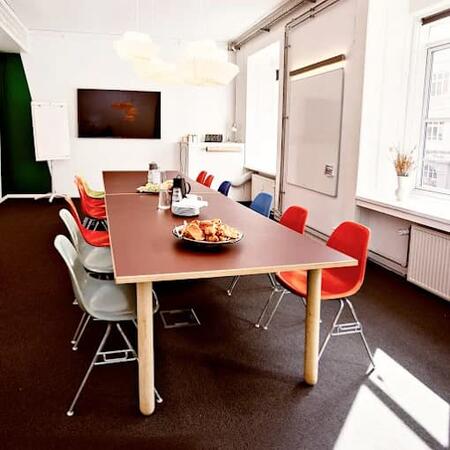
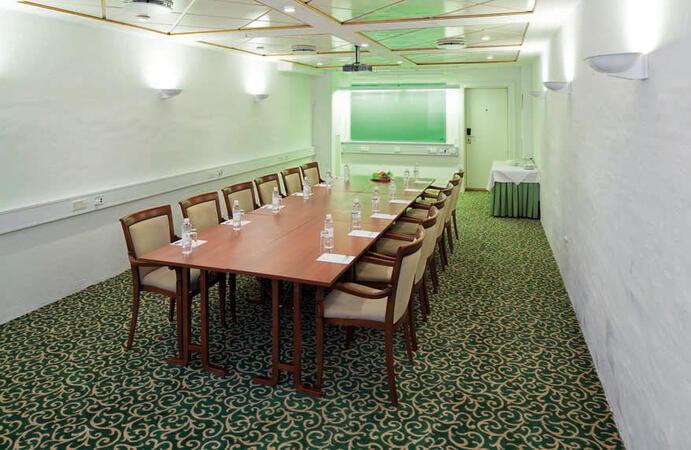
We offer this training in two live formats: "online live training" (also known as "remote live training") and "onsite live training." Online sessions are conducted via an interactive remote desktop environment. Onsite training can be held locally at your facilities in Copenhagen or at NobleProg's corporate training centers in Copenhagen.
You can also take bus 26 or 7A and get off around Vesterbros Torv; from there it is a short walk.
By bus
Useful nearby stops include:
Vesterbros Torv (Vesterbrogade) — about 1 minute from the area.
Frederiksberg Allé (Vesterbrogade) — nearby.
Trommesalen (Vesterbrogade) — nearby.
Bus 26 and 7A serve the Vesterbrogade corridor.
København, Copenhagen
NobleProg København, Bredgade 37, København K, denmark, 1260
Near Amalienborg Palace & Royal Theatre.
If you arrive by train
If you arrive at Copenhagen Central Station (København H):
Walk to København H Metro.
Take the M3 or M4 metro toward Kongens Nytorv.
Get off at Kongens Nytorv.
Walk north toward Nyhavn, then continue along Bredgade.
Bredgade 37 is about 500 m / 6 minutes' walk from Kongens Nytorv.
Another easy option
Marmorkirken (Marble Church) Metro Station is also very close to Bredgade 37. The nearby Bredgade area is about 2 minutes' walk from Marmorkirken station.
By bus
There are bus stops around Dronningens Tværgade / Bredgade, so you can also travel by bus and walk the final few minutes.
This live, instructor-led session in Copenhagen, offered online or on-site, is tailored for entry-level professionals seeking to understand the ethical challenges and regulatory environments of autonomous vehicles.
Upon completion, participants will be able to:
Grasp the ethical consequences of AI decision-making in autonomous vehicles.
Analyze global regulatory frameworks and policies for self-driving cars.
Explore liability and accountability in the context of autonomous vehicle accidents.
Assess the equilibrium between innovation and public safety in autonomous driving laws.
Examine real-world cases involving ethical dilemmas and legal conflicts.
This live, instructor-led session, conducted in Copenhagen (either online or on-site), is tailored for beginners and enthusiasts who want to master the basic concepts, technologies, and uses of autonomous vehicles.
By the conclusion of this training, participants will be capable of:
Grasping the primary components and working principles of autonomous vehicles.
Examining the contribution of AI, sensors, and real-time data processing in self-driving systems.
Reviewing different levels of vehicle autonomy and their real-world uses.
Exploring the ethical, legal, and regulatory factors of autonomous mobility.
Obtaining hands-on experience with autonomous vehicle simulations.
This live, instructor-led training, conducted in Copenhagen (either online or onsite), targets intermediate-level network engineers and automotive IoT developers looking to understand and deploy V2X communication technologies for autonomous vehicles.
Upon completion of the training, participants will be able to:
Grasp the core principles of V2X communication.
Evaluate communication models such as V2V, V2I, V2P, and V2N.
Deploy V2X protocols, including DSRC and C-V2X.
Create simulations for connected vehicle environments.
Mitigate cybersecurity and privacy risks in V2X networks.
This instructor-led live training, offered in Copenhagen (online or onsite), targets intermediate-level engineers, automotive professionals, and IoT specialists aiming to grasp the role of sensors in self-driving cars, encompassing LiDAR, radar, cameras, and sensor fusion techniques.
By the end of this training, participants will be able to:
Understand the various sensor types utilized in autonomous vehicles.
Analyze sensor data for real-time vehicle perception and decision-making.
Implement sensor fusion techniques to improve vehicle accuracy and safety.
Optimize sensor placement and calibration for enhanced autonomous driving performance.
This instructor-led, live training in Copenhagen (online or onsite) is designed for advanced safety engineers and automotive safety professionals seeking to develop comprehensive safety strategies for autonomous vehicles, encompassing hazard analysis, functional safety assessments, and adherence to international standards.
Upon completion of this training, participants will be equipped to:
Recognize and evaluate safety risks inherent in autonomous driving systems.
Perform hazard analysis and risk assessments in accordance with industry standards.
Execute safety validation and verification methods for AV systems.
Apply functional safety standards, including ISO 26262 and SOTIF.
Formulate risk mitigation strategies to address AV safety challenges.
This instructor-led, live training in Copenhagen (online or onsite) is aimed at advanced-level sensor fusion specialists and AI engineers who wish to develop multi-sensor fusion algorithms and optimize real-time navigation in autonomous systems.
By the end of this training, participants will be able to:
Understand the fundamentals and challenges of multi-sensor data fusion.
Implement sensor fusion algorithms for real-time autonomous navigation.
Integrate data from LiDAR, cameras, and RADAR for perception enhancement.
Analyze and evaluate fusion system performance under various conditions.
Develop practical solutions for sensor noise reduction and data alignment.
This live, instructor-led training in Copenhagen focuses on the design and development of automotive software using AUTOSAR Classic and Adaptive platforms. Participants will acquire practical skills in component configuration, ADAS software integration, and the application of safety standards, utilizing industry-leading tools.
This instructor-led, live training in Copenhagen (available online or on-site) is designed for intermediate-level AI developers and computer vision engineers looking to build robust vision systems for autonomous driving applications.
By the end of this training, participants will be able to:
Understand the fundamental concepts of computer vision in autonomous vehicles.
Implement algorithms for object detection, lane detection, and semantic segmentation.
Integrate vision systems with other autonomous vehicle subsystems.
Apply deep learning techniques for advanced perception tasks.
Evaluate the performance of computer vision models in real-world scenarios.
This instructor-led, live training in Copenhagen (online or onsite) targets intermediate automotive engineers and technicians aiming to build hands-on skills in testing, simulating, and diagnosing ECUs using Vector tools such as CANoe and CANape.
By the end of the session, participants will be able to:
Comprehend the role and functionality of ECUs in vehicle systems.
Set up and tailor Vector tools like CANoe and CANape.
Simulate and test ECU interactions on CAN and LIN networks.
Process data and run diagnostics on ECUs.
Formulate test cases and automate testing procedures.
Calibrate and fine-tune ECUs through practical techniques.
Delivered by an instructor in a live setting (online or on-site) in Copenhagen, this course is designed for advanced robotics engineers and AI researchers who aim to implement complex path planning algorithms to elevate the capabilities of autonomous vehicles.
By the conclusion of this training, participants will be able to:
Grasp the theoretical basis of advanced path planning methodologies.
Execute algorithms like RRT*, A*, and D* for immediate navigation needs.
Optimize path selection for obstacle avoidance and dynamic conditions.
Merge path planning with sensor data to improve precision.
Test the capabilities of various algorithms in real-world contexts.
This live, instructor-led training in Copenhagen (available online or onsite) is designed for intermediate-level automotive engineers and embedded systems developers seeking to grasp the theoretical aspects of ECUs, with a focus on the Vector-based tools and methodologies used in automotive design and development.
Upon completing this training, participants will be equipped to:
Comprehend the architecture and functional roles of ECUs in modern vehicles.
Analyze the communication protocols utilized in ECU development.
Investigate Vector-based tools and their theoretical applications.
Implement model-based development principles in ECU design.
This live, instructor-led training, delivered in Copenhagen (either online or onsite), is crafted for intermediate professionals aiming to master EV powertrain architectures, battery chemistry, Battery Management Systems (BMS), and the determinants of energy efficiency in electric vehicles.
By the conclusion of this program, participants will be capable of:
Comprehending the structural and functional dynamics of EV powertrains.
Analyzing distinct battery chemistries and their practical applications in the automotive sector.
Implementing robust battery management strategies to boost performance and ensure safety.
Evaluating energy efficiency profiles across various EV configurations.
This instructor-led, live training in Copenhagen (online or onsite) is designed for advanced-level data scientists, AI specialists, and automotive AI developers who seek to build, train, and optimize AI models for autonomous driving applications.
By the end of this training, participants will be able to:
Understand the fundamental concepts of AI and deep learning in the context of autonomous vehicles.
Implement computer vision techniques for real-time object detection and lane following.
Utilize reinforcement learning to support decision-making in self-driving systems.
Integrate sensor fusion techniques to enhance perception and navigation.
Develop deep learning models for the prediction and analysis of driving scenarios.
This live, instructor-led training on Copenhagen (delivered online or on-site) is designed for entry-level quality engineers who want to learn how to apply Quality Core Tools to ensure product excellence in the manufacturing sector.
By the end of the program, participants will be able to:
Understand the critical role and integration of Quality Core Tools.
Master the concepts and practical application of APQP for effective product quality planning.
Identify potential failures in products and processes, understand their impact on quality, and implement actions to mitigate risks.
Leverage statistical methods to monitor and control manufacturing processes, guaranteeing product quality and process efficiency.
This instructor-led live training, conducted in Copenhagen (either online or on-site), is designed for entry-level quality control professionals looking to comprehend the basics of Statistical Process Control (SPC) and apply these skills in practical settings.
By the conclusion of this program, participants will be equipped to:
Comprehend the core principles of Statistical Process Control (SPC).
Utilize fundamental SPC tools, such as control charts, histograms, Pareto charts, and scatter diagrams, to oversee process performance.
Construct and interpret various control charts for variable and attribute data to identify and analyze process deviations.
Discover how Machine Learning and Deep Learning are transforming the automotive sector in Denmark. This Copenhagen programme covers essential concepts, from simple automation to autonomous decision-making, including neural networks and practical TensorFlow examples tailored for real-world applications.
The "Automotive SPICE (A-SPICE) - Introduction" workshop focuses on reviewing the Automotive SPICE process assessment model, discussing its structure, classification, and interpretive guidelines. Participants gain the competencies to understand the assessment process from the perspective of project managers and stakeholders. The course covers the significance of ASPICE in the market, compliance, various process groups, and ASPICE levels through examples of real-world implementations.
This live, instructor-led training session, held in Copenhagen (either online or onsite), is tailored for engineers seeking to protect connected vehicles from cyber attacks.
By the end of the program, participants will be able to:
Implement cybersecurity protocols in automotive systems.
Select the most fitting technologies, tools, and approaches.
This instructor-led, live training in Copenhagen (delivered online or on-site) is designed primarily for engineers aiming to utilize AUTOSAR for automotive component design.
By the end of this program, participants will be equipped to:
This live, instructor-led course, available online or on-site, is tailored for intermediate embedded software developers and automotive engineers aiming to use the AUTOSAR Classic Platform. The focus is on the development, integration, and testing of standardized software components for electronic control units (ECUs).
By the end of the training, participants will be capable of:
Installing and configuring AUTOSAR development tools, including DaVinci Developer, EB Tresos, or ETAS ISOLAR-A/B.
Understanding the AUTOSAR layered architecture and its basic software modules (BSW).
Designing and implementing the AUTOSAR OS and communication stack (COM stack).
Applying CANoe or similar tools for simulation, testing, and diagnostics within an AUTOSAR context.
This live, instructor-led training, offered online or onsite, targets intermediate embedded software developers and automotive engineers. It focuses on mastering the configuration of AUTOSAR OS (OSEK/VDX based) and the COM Stack to ensure robust task scheduling and communication in automotive ECUs.
By the end of the program, participants will be capable of:
Comprehending the AUTOSAR OS architecture and its scheduling policies.
Managing the implementation of tasks, events, alarms, and counters.
Defining and setting up COM Stack layers, including PDUR and communication services.
Explaining protocol stacks (CAN, LIN, FlexRay, Ethernet) and their integration with AUTOSAR.
Configuring OS and COM modules using professional tools such as Vector DaVinci or ETAS ISOLAR.
Validating task and communication flows through simulation in an AUTOSAR-based ECU.
Read more...
Last Updated:
Testimonials (1)
Good expertise of the trainer
Christoph Perret - RENAULT TECHNOLOGIE ROUMANIE S.R.L.
Online Automotive training in Copenhagen, Automotive training courses in Copenhagen, Weekend Automotive courses in Copenhagen, Evening Automotive training in Copenhagen, Automotive instructor-led in Copenhagen, Evening Automotive courses in Copenhagen, Weekend Automotive training in Copenhagen, Automotive coaching in Copenhagen, Automotive classes in Copenhagen, Automotive trainer in Copenhagen, Automotive one on one training in Copenhagen, Online Automotive training in Copenhagen, Automotive instructor-led in Copenhagen, Automotive on-site in Copenhagen, Automotive boot camp in Copenhagen, Automotive private courses in Copenhagen, Automotive instructor in Copenhagen